




Switzerland's Football Economy: The Business Behind Europe's Quiet Success
WBO Times | Special Report
While global attention often gravitates toward football's biggest leagues and wealthiest clubs, Switzerland has been quietly constructing one of Europe's most resilient and sophisticated football economies. Rather than relying on extravagant transfer spending or billionaire ownership, the country has built an ecosystem where talent development, institutional governance, innovation, education, and commercial sustainability reinforce one another.
Today, football represents far more than a sporting activity within the Swiss economy. It has evolved into a high-value industry that supports employment, stimulates innovation, attracts foreign investment, and strengthens Switzerland's position as one of the world's leading centers for international sports governance.
At the heart of this transformation lies a long-term investment strategy focused on human capital. Swiss football clubs have become internationally recognized for developing technically refined young players through modern academies that emphasize education, sports science, data analytics, and psychological development alongside athletic performance. Instead of competing financially with Europe's richest clubs, Switzerland has established itself as one of the continent's most efficient exporters of football talent.
This development model has fundamentally reshaped the financial structure of Swiss clubs. Revenue is increasingly generated through player development and transfers, commercial partnerships, broadcasting rights, academy programs, sponsorships, and diversified business operations. The result is a more balanced and financially resilient football industry that remains less vulnerable to the volatility affecting many heavily leveraged European clubs.
Women's football has become another strategic pillar of Switzerland's sports economy. Significant investment in professional leagues, youth development pathways, coaching standards, and club licensing has accelerated following major international tournaments. Rather than treating women's football as a parallel project, Swiss policymakers increasingly view it as a high-growth investment sector capable of expanding media rights, sponsorship portfolios, and long-term commercial value.
Beyond domestic competitions, Switzerland occupies a uniquely influential position in global sports governance. The country hosts numerous international sports institutions, arbitration bodies, marketing agencies, sports technology firms, legal consultancies, and innovation companies. This concentration of expertise has created a powerful sports business ecosystem extending well beyond football itself, generating substantial economic activity in legal services, finance, event management, digital technologies, artificial intelligence, sports medicine, and performance analytics.
The emergence of sports technology has further accelerated this transformation. Swiss companies are actively contributing to advances in player tracking systems, performance analytics, injury prevention, medical technologies, fan engagement platforms, and AI-driven decision-support tools. Football has increasingly become a testing ground for technological innovation, positioning Switzerland at the intersection of sport, data, and digital transformation.
Major football tournaments have also demonstrated measurable macroeconomic benefits. International competitions stimulate tourism, hospitality, transportation, media production, retail activity, and international investment flows while enhancing Switzerland's global brand. The economic impact extends well beyond stadium revenues, reinforcing the country's reputation as a trusted destination for hosting complex international events.
Perhaps Switzerland's greatest competitive advantage lies not in producing the world's largest football clubs, but in designing one of its most efficient football business models. By integrating education, innovation, governance, technology, and financial discipline, Switzerland has transformed football into a sustainable economic asset rather than a speculative entertainment industry.
As global sports continue to evolve into a trillion-dollar economy, Switzerland appears exceptionally well positioned to strengthen its influence. Its experience demonstrates that the future of football will be determined not only by trophies won on the pitch, but by the ability to create resilient institutions, commercial innovation, and long-term economic value beyond the game itself.
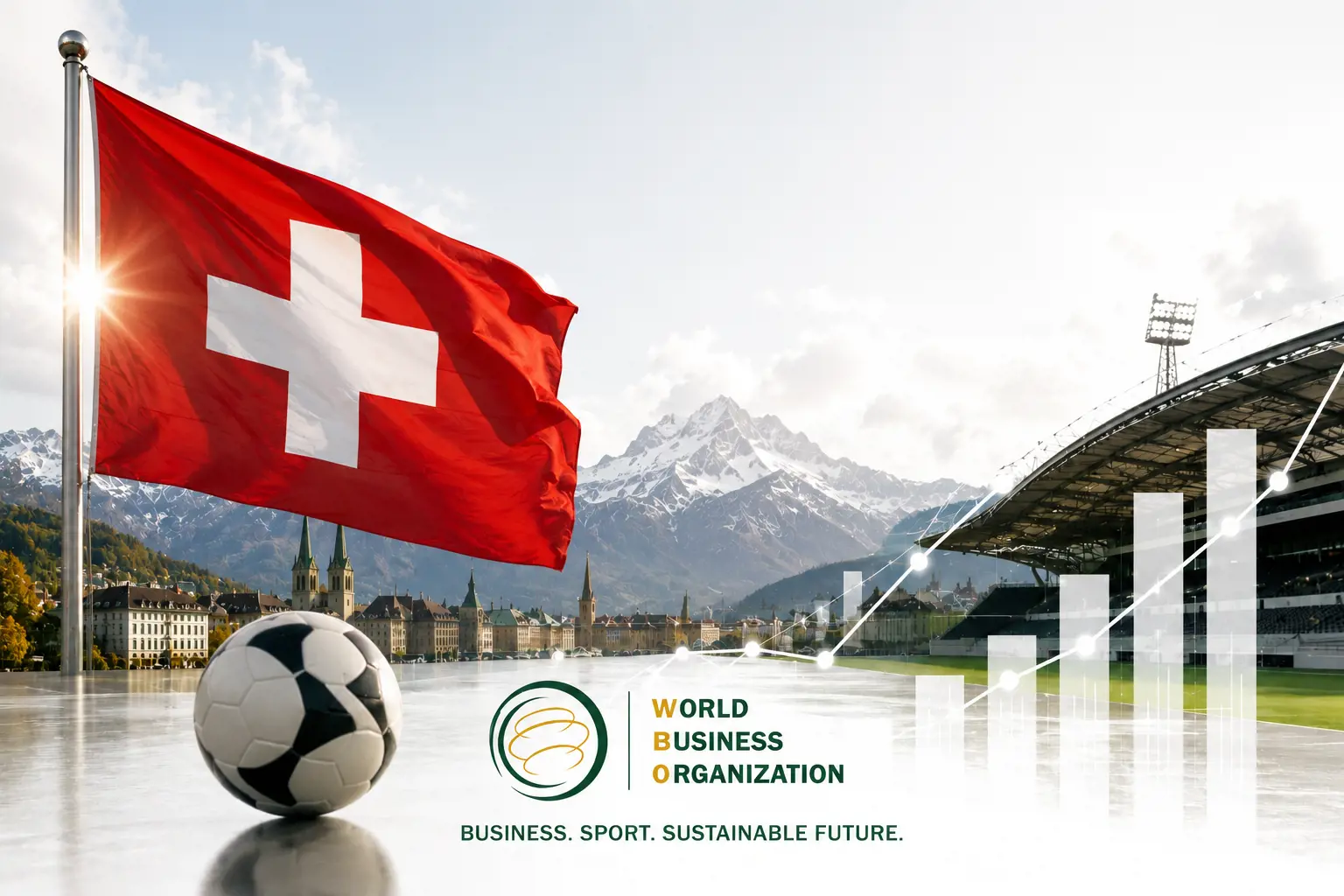
From talent development and sports technology to sustainable club management and international investment, Switzerland is redefining football as a high-value economic industry and setting a new global benchmark for the future of sports business.
Font Size
1x
Reading time: 3 min