




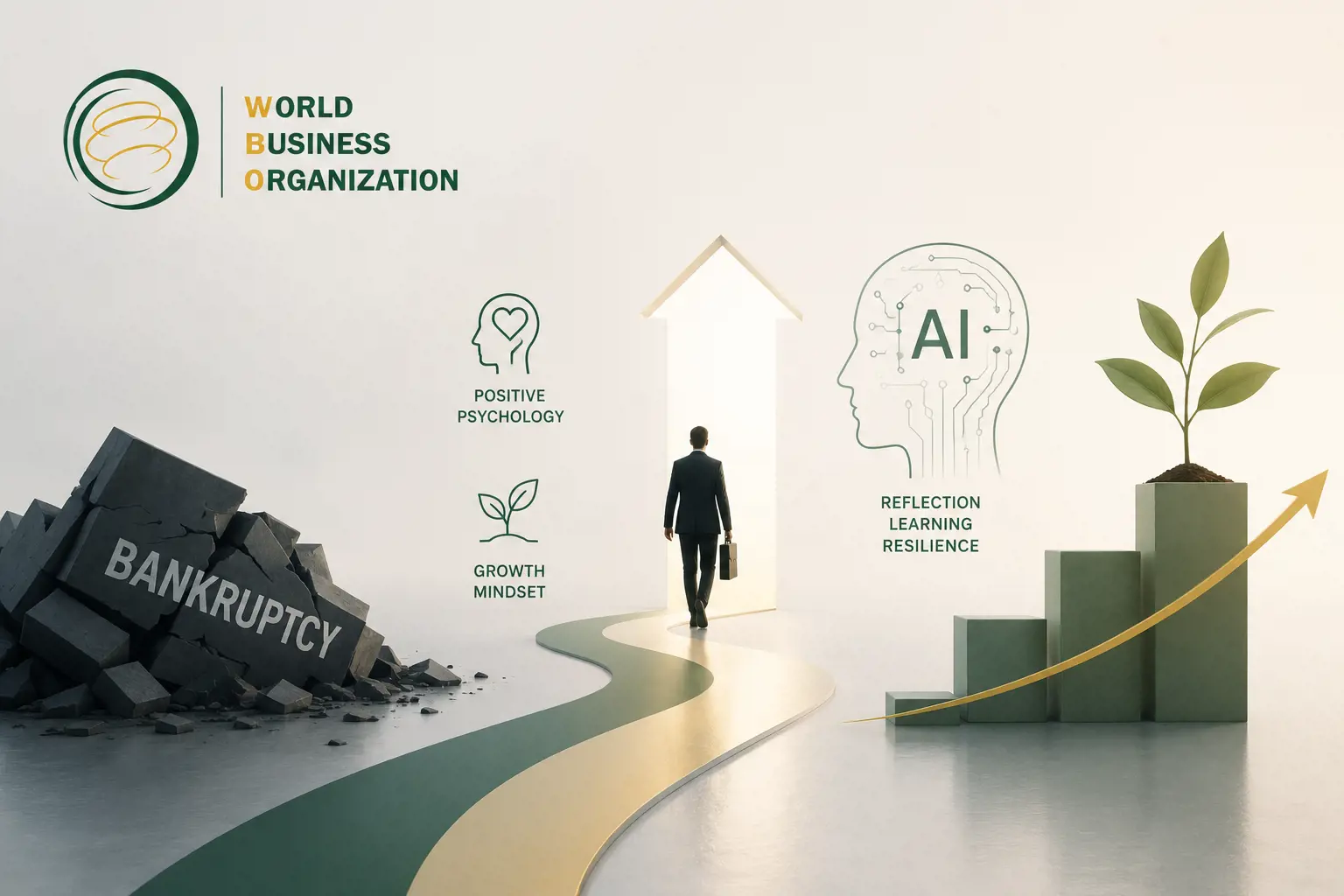
Post-Bankruptcy Growth Mindset: Integrating Positive Psychology and Artificial Intelligence
Business bankruptcy is commonly viewed as an endpoint—a symbol of financial failure and professional disappointment. However, emerging research in positive psychology suggests that adversity can also become a catalyst for personal and professional growth. The concept of a **growth mindset** offers a valuable framework for understanding how entrepreneurs can transform failure into learning, resilience, and future success. Combined with the reflective capabilities of artificial intelligence (AI), this approach presents a promising pathway for entrepreneurial recovery and long-term development.
A growth mindset is based on the belief that abilities, knowledge, and decision-making skills can be developed through experience, reflection, and continuous learning. In contrast, a fixed mindset interprets failure as evidence of permanent inadequacy. Following bankruptcy, entrepreneurs with a fixed mindset often internalize failure, believing they cannot succeed. Those with a growth mindset, however, view business failure as feedback rather than personal defeat. They ask not, “Why did I fail?” but, “What can I learn from this experience?”
Positive psychology provides practical strategies that support this transformation. Practices such as self-compassion, gratitude, identifying personal strengths, and finding meaning in adversity encourage entrepreneurs to move beyond self-criticism toward constructive reflection. Rather than denying emotional pain, positive psychology emphasizes acknowledging setbacks while using them as opportunities for psychological and professional development.
Artificial intelligence can strengthen this process by functioning as a growth-oriented coaching tool. Instead of simply generating answers or business recommendations, AI can encourage reflective thinking through meaningful questions. Daily prompts such as *What did you learn today?*, *Which strength helped you overcome a challenge?*, or *What would you do differently if faced with the same situation again?* promote self-awareness and reinforce a learning-oriented mindset. Over time, these reflective conversations help entrepreneurs recognize patterns, monitor personal progress, and develop healthier cognitive habits.
From a psycho-trading perspective, this approach mirrors the practices of successful traders who carefully review losing trades to improve future performance. Experienced traders understand that financial losses are valuable only if they generate insight. The same principle applies to entrepreneurship: bankruptcy becomes productive when it produces learning rather than discouragement. Every setback provides data that can improve future decisions, provided individuals are willing to analyze their experiences objectively.
The integration of positive psychology and AI shifts the focus of entrepreneurial recovery from merely restoring financial stability to fostering personal growth. Instead of viewing AI as a replacement for human intelligence, this framework positions it as a cognitive companion that supports reflection, learning, and emotional resilience. Ultimately, successful recovery after bankruptcy is not measured by returning to a previous position but by becoming a wiser, more adaptive decision-maker. In this sense, the greatest achievement after failure is not simply rebuilding a business—it is rebuilding the mindset that creates sustainable success.
Dr. Sara Mei
Psycho-Trade Think Tank Chairman