




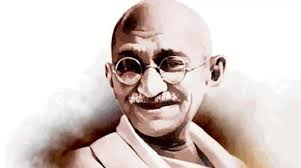
If Gandhi were to look at the world today—a world marked by economic inequality, political tensions, and recurring crises—what might he say? In this reconstructed analytical interview, based on his writings, speeches, and philosophical outlook, we attempt to revisit Gandhi’s perspective in light of the challenges facing today’s world.
Interviewer: Today’s world is facing political tensions, wars, and deep mistrust among nations. Do you think humanity has moved closer to the ideals of peace and nonviolence that you once advocated?
Gandhi: Human progress has always been slow and accompanied by suffering. Violence may appear powerful in the short term, but in the end it destroys both the victim and the perpetrator. I have always believed that nonviolence is not merely a moral principle; it is a practical method for resolving conflict. If nations continue to rely on force rather than dialogue and justice, they will remain trapped in a cycle of retaliation and conflict. True peace requires courage—the courage to abandon hatred and seek truth.
Interviewer: In many parts of the world today, economic inequality has deepened, and a small segment of society controls a large share of global wealth. How do you assess this situation?
Gandhi: Extreme inequality is a sign that society has drifted away from its moral responsibility. Wealth itself is not evil, but wealth without social responsibility can be destructive. I proposed the concept of “trusteeship,” meaning that those who possess wealth should consider themselves trustees of society’s resources and use them for the welfare of all. A civilization that builds the comfort of a few upon the suffering of the many cannot remain sustainable.
Interviewer: Economic globalization has connected economies more deeply than ever before, yet some societies feel their identity or economic security is threatened. What was your view on globalization?
Gandhi: Ultimately, the world is one human family, and exchange among nations can be beneficial for all. However, globalization must not undermine the dignity and self‑reliance of local communities. I believed in the principle of “Swadeshi,” which emphasizes responsibility and economic capability at the local level. A healthy global order must balance international cooperation with respect for local communities. When economic systems ignore the needs of ordinary people, they no longer serve humanity.
Interviewer: Many observers believe that leadership in today’s world is driven less by ethics and more by power competition and short‑term political interests. In your view, what defines ethical leadership?
Gandhi: Leadership begins with self‑discipline. One who cannot govern oneself cannot guide others. True leadership is service. A leader must be willing to sacrifice personal comfort, reputation, and even power for the welfare of the people. The measure of leadership is not domination over others, but the ability to awaken the moral strength of society.
Interviewer: Let us conclude with two final questions. First: does today’s world align with the ideals you once envisioned?
Gandhi: The world has progressed in many ways; science, communication, and knowledge have expanded greatly. Yet humanity’s moral progress has not always kept pace with its material advancement. Human beings still struggle with greed, fear, and violence. My hope was never that the world would become perfect, but that people would continue striving toward truth and compassion. That effort must never cease.
Interviewer: And the final question: how close is your country, India, today to the vision you once had for it?
Gandhi: My vision for India was not merely political independence; it was moral and social freedom. An India where even the poorest person feels the country belongs to them; a society where different religions and communities live together with mutual respect; and a government that uses power in service of the people. Independence was only the beginning, not the end. Justice and equality must continue that journey.
Conclusion
In an era marked by geopolitical rivalry, economic inequality, and widening social divides, the ideas of Mahatma Gandhi remain deeply relevant. His philosophy reminds us that political power without moral responsibility ultimately weakens itself. Revisiting Gandhi’s thought suggests that many of today’s global crises can still be better understood through the experiences and ideas of history’s great leaders.