




European Union Unveils a New Industrial Strategy to Strengthen Global Competitiveness
The European Union is entering a decisive phase of industrial policy aimed at strengthening its long-term economic resilience and global competitiveness. Faced with increasing geopolitical uncertainty, rising international competition, supply chain vulnerabilities, and the rapid advancement of emerging technologies, the EU has shifted from a predominantly market-driven approach toward a more strategic industrial framework.
Central to this transformation is the objective of reducing dependence on external suppliers for critical technologies and raw materials while accelerating investment in sectors considered essential for future economic growth. These include semiconductors, artificial intelligence, clean energy technologies, advanced manufacturing, biotechnology, batteries, hydrogen, aerospace, and digital infrastructure.
A significant component of the EU's strategy involves expanding public and private investment through targeted funding mechanisms, state aid reforms, and cross-border industrial partnerships. Simultaneously, European institutions are promoting research, innovation, workforce development, and digital transformation to improve productivity and strengthen the region's industrial base.
The strategy also reflects Europe's commitment to balancing economic competitiveness with sustainability. Climate neutrality remains a fundamental objective, encouraging industries to adopt greener production methods while maintaining global competitiveness. This dual focus on industrial growth and environmental responsibility is shaping investment decisions across manufacturing, transportation, construction, and energy sectors.
For international investors and businesses, the EU's evolving industrial policy creates new opportunities in technology partnerships, advanced manufacturing, renewable energy projects, logistics, digital infrastructure, and research collaboration. However, companies seeking access to the European market must also adapt to increasingly sophisticated regulatory standards concerning sustainability, cybersecurity, supply chain transparency, and environmental compliance.
As global competition intensifies, Europe is positioning itself not only as one of the world's largest consumer markets but also as a strategic hub for innovation, high-value manufacturing, and next-generation industrial development.
Strategic Outlook
The European Union's industrial transformation is expected to influence global investment patterns over the next decade. Businesses capable of aligning with Europe's priorities in clean technology, digital innovation, industrial resilience, and sustainable production will be well positioned to benefit from expanding investment opportunities and deeper integration into European value chains.
WBO Insight
Europe's new industrial strategy demonstrates that economic competitiveness is increasingly linked to technological sovereignty, innovation capacity, and resilient supply chains. Governments and businesses that anticipate these structural shifts and invest in strategic partnerships with European industries will be better prepared to compete in the evolving global economy.
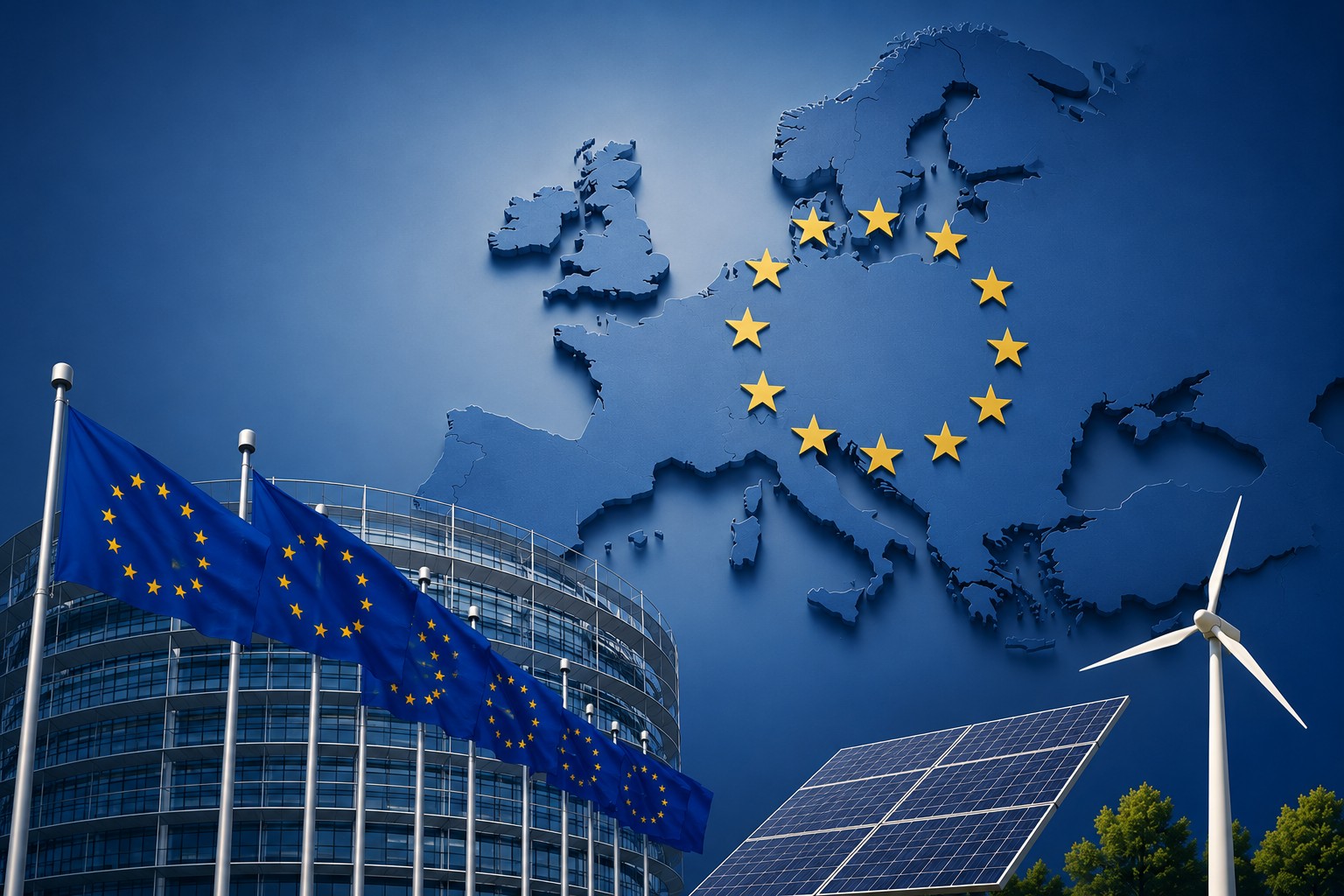
The European Union is accelerating its industrial transformation through new policies designed to reinforce strategic autonomy, enhance technological leadership, and secure critical supply chains. The initiative reflects Europe's ambition to remain a leading global economic power amid intensifying geopolitical and technological competition.
Font Size
1x
Reading time: 2 min