



SMEs Generate the World's Economy—So Why Are So Many Still Left Behind?
Despite representing more than 90% of businesses worldwide, employing roughly 70% of the global workforce, and contributing around half of global GDP, small and medium-sized enterprises (SMEs) continue to face a paradox that economists increasingly describe as one of the greatest untapped opportunities in the global economy. While multinational corporations dominate headlines, it is SMEs that form the backbone of national economies, drive innovation, strengthen local supply chains, and create millions of new jobs every year. Yet their true economic potential remains significantly underutilized because many lack access to international business networks, standardized commercial education, investment readiness programs, and global market intelligence.
Analysts argue that the challenge is no longer simply access to capital. Today's SMEs compete in an environment shaped by artificial intelligence, geopolitical uncertainty, rapidly evolving trade regulations, digital transformation, ESG expectations, and increasingly complex international supply chains. Without internationally recognized business standards, executive-level commercial training, strategic partnerships, and trusted cross-border networks, many promising companies struggle to expand beyond domestic markets. As a result, countless businesses remain local competitors when they possess the capability to become global suppliers.
Recognizing this structural challenge, the World Business Organization (WBO) has developed an integrated ecosystem designed specifically to accelerate SME internationalization. Rather than offering isolated training programs, WBO combines executive education, international business certification, market intelligence, investment facilitation, B2B matchmaking, trade delegations, policy dialogue, and strategic networking into a unified platform. Its educational framework equips entrepreneurs with practical competencies in international trade, business psychology, geopolitical risk, AI-enabled decision-making, compliance, and sustainable commercial development.
According to WBO officials, the organization's long-term objective extends beyond helping individual companies succeed. It seeks to establish a new generation of globally competitive SMEs capable of meeting international standards, attracting foreign investment, participating in cross-border value chains, and creating sustainable economic growth within their own countries. In an era where economic resilience increasingly depends on the strength of entrepreneurial ecosystems, empowering SMEs is no longer a development strategy—it has become a global economic imperative.
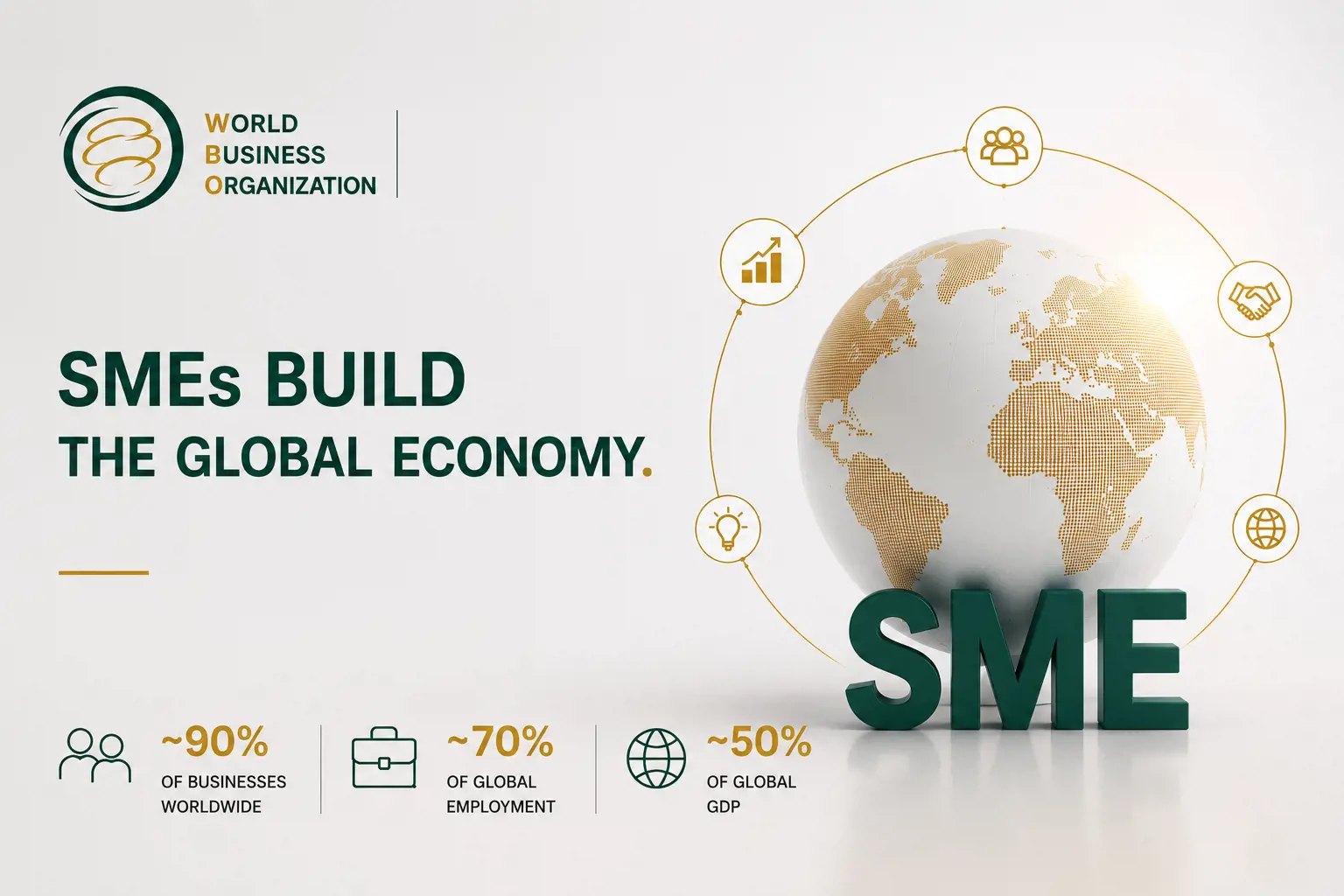
Small and medium-sized enterprises generate the majority of employment and a substantial share of global economic output, yet millions remain disconnected from international markets, modern business standards, and strategic commercial education. Experts believe closing this gap could become one of the largest drivers of global economic growth.
Font Size
1x
Reading time: 2 min