




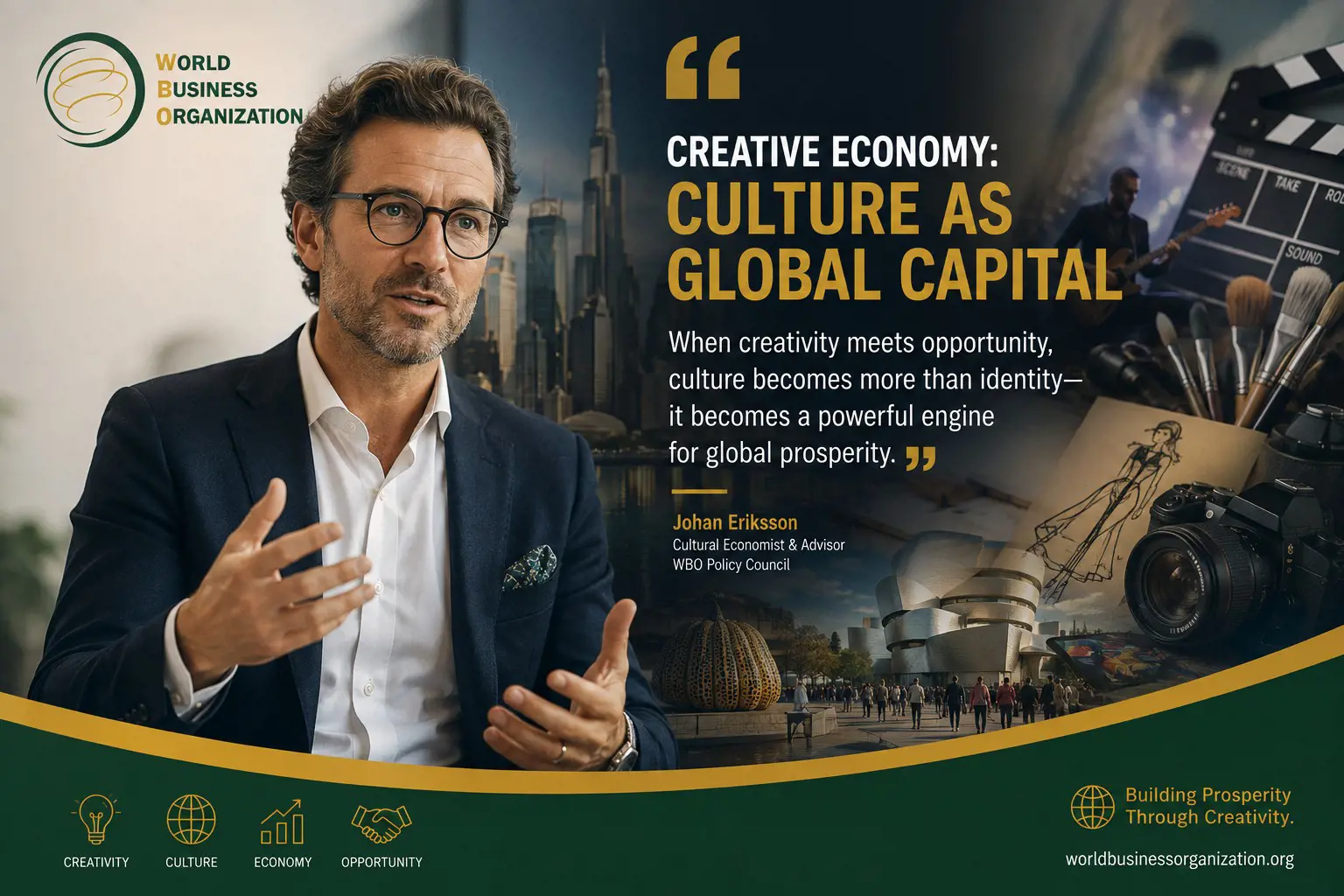
Creative Economy Fuels Global Economic Growth
The global economy is witnessing a profound transformation as creativity becomes an increasingly valuable economic resource. Beyond traditional industries, sectors such as film, music, design, architecture, digital media, fashion, gaming, publishing, and cultural tourism are generating significant economic value while strengthening national competitiveness.
Often referred to as the Creative Economy, this rapidly expanding sector is no longer viewed simply as a cultural ecosystem. Governments and investors now recognize creative industries as strategic engines of innovation, employment, exports, and urban development. Intellectual property, digital content, and cultural experiences have become valuable commodities in an economy increasingly driven by ideas rather than physical assets.
Digital transformation has accelerated this evolution. Streaming platforms, artificial intelligence, immersive technologies, and global e-commerce have enabled creative entrepreneurs to reach international audiences with unprecedented speed. A designer in Helsinki, a filmmaker in Seoul, or an independent musician in Lagos can now access global markets without traditional geographic barriers, creating new opportunities for economic inclusion and cross-border collaboration.
Cities are also repositioning themselves as creative hubs. Investments in cultural districts, innovation centers, museums, festivals, and design ecosystems are attracting talent, tourism, venture capital, and international business. Increasingly, urban competitiveness is measured not only by infrastructure and industrial capacity but also by cultural vibrancy and creative innovation.
Businesses are integrating creativity into their long-term strategies as well. Companies recognize that design thinking, storytelling, cultural intelligence, and brand identity have become decisive competitive advantages. Products that successfully combine technological excellence with cultural relevance often achieve stronger customer engagement and greater global market acceptance.
At the international level, creative exports are strengthening economic diplomacy. Films, music, fashion, literature, cuisine, and digital entertainment are expanding countries' global influence while opening new commercial opportunities. Soft power has evolved into measurable economic capital, reinforcing trade relationships and attracting foreign investment.
However, sustaining the growth of the creative economy requires supportive public policies. Investment in education, intellectual property protection, digital infrastructure, financing for creative enterprises, and international collaboration will be essential to unlocking its full economic potential.
As the global economy becomes increasingly knowledge-based, culture is no longer merely an expression of identity; it is a strategic economic resource. Nations capable of transforming creativity into innovation, entrepreneurship, and international trade will be better positioned to lead the next generation of sustainable economic growth.
Dr. Markus Lindberg
Senior Economist for Creative Industries & Cultural Innovation
International Advisor, World Business Organization (WBO)