



Today at WBOtimes, we have the distinct opportunity to delve into the insights of one of the most pragmatic thinkers and strategists in contemporary economics—someone who, with four decades of experience navigating complex international markets, actively challenges traditional business paradigms.
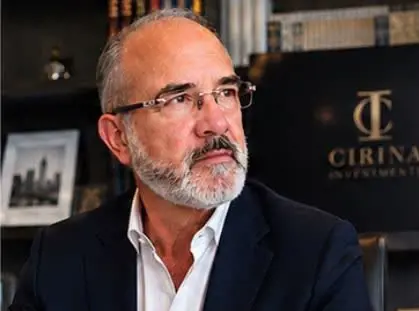
Our guest in this issue is Giuseppe Cirina. In a world where numbers and figures so often overshadow every facet of human existence, Cirina offers a distinct and undeniably more responsible perspective. Economics here is viewed not merely as a mechanical game of ‘profit and loss,’ but as a ‘diplomatic mission.’ For Cirina, the pillars of sustainable development—far beyond financial balance sheets—rest upon three foundational principles: fundamental trust, deep respect for cultural identities, and the purposeful transfer of knowledge.
What follows is an exclusive interview with a strategist who believes that in the world of economics, opportunities are not simply found—they are built.
To start, Giuseppe Cirina, could you please introduce yourself to our audience and provide a summary of your professional background, your role as an economic advisor, and your primary fields of activity in international economic cooperation?
I deeply believe that true economic development is built upon human foundations, respect for local cultures and traditions, mutual trust, professional expertise, and a long-term strategic vision. This principle has guided my career path for over forty years.
My profession is a blend of entrepreneurship, international economic consulting, and high-level institutional relationship development across Europe, North Africa, the Middle East, and other emerging markets. My background as an officer in the “Folgore” Parachute Brigade of the Italian Army has shaped my professional approach—one rooted in discipline, accountability, operational leadership, decisiveness, and the ability to manage complex environments; values that I continue to apply in the development of international economic cooperation programs.
I operate primarily on a personal level, establishing direct relationships with governments, institutions, investors, entrepreneurs, and regional leaders. I firmly believe that the greatest opportunities arise through direct dialogue with decision-makers and the cultivation of relationships based on credibility, trust, and the highest level of confidentiality. This trust has led to the delegation of official missions, which are currently underway in the field of international economic cooperation on behalf of both a European government and the government of an African nation along the Mediterranean coast.
I have resided permanently in Tunisia, a country with which I have maintained professional ties for many years. Since 1991, through my company, I was invited by the Tunisian government to explore opportunities for economic and industrial cooperation. Since then, I have viewed the Mediterranean not as a dividing line, but as a natural space for dialogue, development, and cooperation between Europe, Africa, and the Middle East.
Over the years, I have developed the “Cirina Framework,” an operational model for economic diplomacy that integrates strategic analysis, development of international partnerships, protection of know-how, multidisciplinary coordination, and the creation of sustainable economic ecosystems. I work with a stable international network that I have personally built and carefully selected over time; a network that brings together highly qualified experts from various fields, capable of managing complex projects through a unified strategic vision.
My activities are mainly focused on oil and gas, energy, green hydrogen, strategic raw materials, steel, automotive, agriculture, infrastructure, transport, logistics, healthcare, pharmaceuticals, banking and insurance, cybersecurity, and real estate development.
A fundamental part of my work involves identifying new directions for economic development and new macro-regions for international cooperation, with special attention to the Mediterranean and the Sahel. I believe that every investment must create value not only for investors but also for local territories and communities through knowledge transfer, protection of know-how, respect for cultural identities, and the creation of long-term economic partnerships.
I am convinced that economics, politics, business, research, and culture must work together as complementary forces, collectively contributing to stability, security, and prosperity. For this reason, I view my work not merely as a job, but as a form of international economic diplomacy, aimed at transforming relationships, expertise, and strategic vision into tangible, sustainable projects.
Throughout my professional experience, I have reached a belief that I consider essential: the true success of an investment should not be measured solely by its financial return, but by its ability to create trust, shared prosperity, quality employment, local community development, and respect for the cultures involved. I believe that the value of any project should be evaluated through its positive impact on the people and territories it helps develop.
The principle that guides every initiative I undertake can be summarized in one sentence:
“Opportunities are not something to wait for; they are something we build together.”
It is with this same spirit that I place my experience at the service of the World Business Organization (WBO), with the aim of contributing to a model of international cooperation that is increasingly based on trust, innovation, mutual respect among nations, and the creation of shared value.
Italy in the New Global Economic Order
The global economy is undergoing a profound transformation, driven by geopolitical shifts, supply chain realignment, and increasing economic competition. In this evolving landscape, what strategies is Italy pursuing to strengthen its position as one of the world’s leading industrial and export-driven economies?
Italy is currently undergoing one of the most significant economic and geopolitical transformations in its recent history. In this context, I believe the country has correctly identified several strategic priorities: strengthening the internationalization of its businesses, diversifying export markets, reinforcing economic diplomacy, enhancing the Mediterranean’s role as a natural platform linking Europe, Africa and the Middle East, and deepening cooperation with the African continent through the Mattei Plan.
This is a positive and promising direction. However, in order to transform it into a genuine longterm national strategy, an additional step forward is required.
Italy’s greatest strength does not lie exclusively in its large industrial corporations, but above all in its extraordinary network of micro, small and medium-sized enterprises (MSMEs), which form the backbone of the national productive system. Before increasing exports, we must create the conditions that allow these businesses to grow, innovate and compete by addressing fundamental challenges such as energy costs, access to finance, generational succession, workforce skills development and regulatory simplification.
At the same time, I believe that internationalization itself must evolve. We should not limit ourselves to exporting products or delivering major infrastructure projects. We must export the Italian System. This means supporting not only large corporations abroad, but also professionals, investors, universities, research centres, banks, insurance companies, start-ups, artisans, and micro, small and medium-sized enterprises, encouraging the creation of joint ventures, production networks and long-term industrial partnerships.
Within this process there is an invaluable resource that remains significantly underutilized: Italian communities around the world. Millions of Italians and entrepreneurs of Italian origin represent an extraordinary network of relationships, expertise and international market knowledge. Engaging them in a structured way would strengthen Italy’s global economic presence, facilitate investment and create new opportunities for Italian businesses.
I also believe that modern economic diplomacy should increasingly focus on supporting the entire Italian productive system by facilitating cooperation among businesses, investors and institutions while promoting the development of long-term economic partnerships.
Alongside international expansion, however, it is essential to strengthen the country’s domestic foundations. No growth strategy can be truly effective without continuous investment in Italy’s strategic national assets: energy, infrastructure, transport, logistics, education, universities, research, healthcare and security. Ensuring efficient public services and sustainable costs strengthens business competitiveness, improves citizens’ quality of life and creates an attractive environment for investment.
Furthermore, I believe that Italy’s future depends on its ability to retain its young talent, enhance their skills and restore dignity to productive work by supporting those who create businesses, invest and generate employment. A nation grows when it invests simultaneously in human capital, knowledge and industrial capability.
Finally, I am convinced that the success of an economic strategy should not be measured solely by GDP growth or export performance. It should also be assessed by its ability to generate widespread prosperity, skilled employment, knowledge transfer, the protection of know-how, respect for local cultures and shared value for all stakeholders involved.
Italy possesses all the qualities necessary to become one of the leading players in the new global economy. To achieve this, it must evolve from a model primarily based on exporting goods and services to one capable of building international economic ecosystems, where institutions, businesses, professionals, investors and Italian communities around the world work together as one integrated system.
Italy’s future will not depend solely on what it exports, but on its ability to build relationships, transfer knowledge, create trust and generate shared value. In my view, this is the true mission of economic diplomacy in the twenty-first century.
The Future of the European Economy
The European Union is facing significant challenges, including slower economic growth, energy transition, technological competition, and shifting global trade dynamics. In your opinion, what reforms are essential to enhance Europe’s long-term competitiveness, and what role should Italy play in shaping that future?
The European Union represents one of the most significant experiences of political and economic cooperation in modern history. It has ensured decades of peace, promoted the free movement of people, goods and capital, and contributed to the development of the Single Market. However, the profound transformation of today’s geopolitical landscape calls for a courageous reflection on the future of the European project.
In my view, Europe’s competitiveness will not depend on increasing centralization of decision-making, but rather on its ability to achieve a new balance between common action and the responsibility of Member States. Europe should be strong where unity creates real added value, while allowing each nation to preserve and express its own economic, social and cultural identity in the areas that form the foundation of its society.
I believe that several strategic sectors should remain primarily under the responsibility of national governments, including healthcare, education, culture, the protection of traditional industries and local products, labour organization, domestic industrial policy, and the safeguarding of each country’s economic and social heritage. National identities are one of Europe’s greatest assets and should be regarded as a source of strength rather than an obstacle to integration.
At the same time, the European Union should focus its efforts more decisively on the challenges that genuinely require collective action: energy security, scientific research, technological innovation, cybersecurity, the protection of critical infrastructure, access to strategic raw materials, industrial competitiveness, international trade policy and the resilience of global supply chains.
An equally important reform concerns Europe’s relationship with its productive sector. Europe must reduce the administrative and regulatory burden placed upon businesses and develop a genuine industrial policy capable of supporting innovation, investment, research and competitiveness. Micro, small and medium-sized enterprises (MSMEs) represent the backbone of the European economy and deserve more effective tools to grow, innovate and expand internationally.
Within this framework, Italy can play a decisive role. Thanks to its strategic geographical position, industrial tradition and historical vocation, our country can become the leading economic bridge between Europe, the Mediterranean, Africa and the Middle East, promoting cooperation based on dialogue, mutual respect and the creation of long-term partnerships.
I am also convinced that Europe should place far greater emphasis on human capital, professional expertise, entrepreneurs, investors and the extensive business networks that already exist across Member States, encouraging the development of integrated economic ecosystems rather than focusing solely on individual projects or companies.
Throughout my international experience, I have developed a conviction that I consider fundamental: integration does not mean uniformity. Every nation possesses unique strengths, traditions, expertise and economic models that deserve to be preserved. Europe’s objective should not be to make all countries the same, but to combine the best capabilities of each nation, transforming diversity into a shared competitive advantage.
This is the same philosophy that underpins the Cirina Framework, the operational model I have developed over the years: building cooperative networks in which institutions, businesses, professionals, investors and local communities work together while preserving their own identities and competencies, creating shared value without sacrificing their distinctive characteristics.
I believe this should also define the future direction of Europe: a Europe less focused on uniformity and more committed to promoting the excellence of each Member State, strengthening economic cooperation, protecting know-how, enhancing industrial competitiveness and fostering sustainable development.
Europe will become truly competitive not when all its nations are identical, but when every country is able to contribute its very best within a common project founded on mutual respect, shared responsibility and genuine cooperation among peoples.
Italy’s Economic Cooperation with Africa
Italy has significantly expanded its economic engagement with African nations in recent years. Beyond trade and investment, how do you envision this partnership contributing to sustainable development, technology transfer, and long-term economic prosperity for both Italy and Africa?
Italy and Africa are linked by a shared history, a unique geographical proximity, and economic interests that are destined to grow stronger in the coming decades. In my view, the future of this relationship cannot be built solely on trade or infrastructure investments; it must be based on a shared vision of development in which both sides grow together.
For many years, Africa has been viewed primarily as a destination market or a source of raw materials. I believe that today it represents one of the world’s main engines of economic growth and a strategic partner with whom to build long-term relationships based on mutual respect, the transfer of expertise, and the empowerment of local communities.
Every international project should begin with one simple principle: listening to the local territory. Development cannot be imposed from the outside; it must be built together with governments, institutions, entrepreneurs, professionals and local communities, while respecting their cultural identities, traditions and economic priorities.
For this reason, I believe it is essential that cooperation between Italy and Africa evolves towards the creation of long-term industrial partnerships, joint ventures, training programmes, technology transfer and the development of local skills. The objective should not simply be to export products or capital, but to create productive capacity, skilled employment and shared value within the territories involved.
Throughout my professional career, I have devoted many years to studying the economic dynamics of the Mediterranean and the Sahel, gaining first-hand knowledge of both the opportunities and the challenges these regions present. This work has led to the development of three strategic projects, conceived within the private sector and currently confidential, designed to promote a new era of economic cooperation between Europe, the Mediterranean and Africa.
For reasons of confidentiality and investor protection, these projects can only be presented within appropriate institutional forums and in discussions with governments, private investors and institutional investors. However, I can state that they all share a common objective: to transform the Mediterranean and the Sahel into a major area of economic, industrial and logistical cooperation capable of generating sustainable development, security, employment and shared prosperity.
I am convinced that Italy can play a central role in this process. Its strategic geographical position, the quality of its industrial system, its technological and manufacturing excellence, and its longstanding tradition of dialogue with the African continent enable it to become the leading economic bridge between Europe and Africa.
Achieving this objective, however, will require the involvement of the entire Italian System: institutions, large companies, professionals, investors, universities, research centres, banks, insurance companies, micro, small and medium-sized enterprises, and Italian communities living abroad. Only by building an integrated ecosystem will it be possible to create truly lasting and sustainable cooperation.
My experience has taught me that the strongest investments are not those that generate financial returns alone, but those that build trust, transfer knowledge, protect local cultures and leave behind a lasting legacy of skills and opportunities for future generations.
This is the vision I continue to pursue: an international cooperation model capable of combining economic development, human dignity, the protection of know-how, innovation and shared responsibility. I firmly believe that the Mediterranean and the Sahel can become one of the world’s leading laboratories for the new global economy, and that Italy has all the expertise and capabilities required to play a leading role in this transformation.
The Role of International Organizations in Supporting the Private Sector
Governments alone cannot address every challenge facing the global economy. From your perspective, what role can international organizations such as the World Business Organization (WBO) play in strengthening private sector cooperation, facilitating cross-border investment, and creating new opportunities for international trade?
I believe that no government, acting alone, can address all the economic challenges of our time. Governments play a fundamental role in establishing the regulatory framework, ensuring institutional stability and providing the necessary guarantees. However, the true driving force behind development lies in people, businesses, professionals, investors and their ability to build relationships based on trust.
It is precisely in this space that international organizations such as the World Business Organization (WBO) can play a decisive role.
The WBO can become a permanent platform that brings together ideas, expertise, capital and opportunities, fostering connections between private investors, institutions, businesses and professionals from different countries. Today, the world does not need only additional financial resources; above all, it needs credible people who share a common vision and a genuine commitment to building projects that create long-term value.
Financial capital is indispensable, but by itself it is not enough. Trust, competence, coordination and a shared vision are equally essential. When these elements come together, governments can facilitate the process by providing institutional support, guarantees and an enabling regulatory environment, allowing investments to be transformed rapidly into concrete and operational projects.
In my opinion, a modern international organization should promote the creation of cooperation ecosystems, where large corporations, micro, small and medium-sized enterprises, professionals, investors, universities, research centres, banks, insurance companies and local communities work together as a single integrated system, sharing expertise, responsibilities and benefits.
An equally important role can be played by cultural associations, which serve as a natural bridge between peoples. Economic development cannot be separated from mutual understanding, dialogue and respect for cultural identities. For this reason, I believe that major international projects should also be accompanied by cultural, educational and training initiatives capable of strengthening trust between communities and creating a favourable environment for investment.
I am convinced that every international project should be evaluated not only for its financial return, but also for its ability to create employment, transfer knowledge, protect know-how, respect local cultures and contribute to the long-term stability and prosperity of the communities involved.
My international experience has taught me that people naturally aspire to live, grow and build their future in the country where they were born, close to their families, traditions and cultural roots. For this reason, international cooperation should aim to create economic opportunities directly within local communities, enabling them to develop in an autonomous, sustainable and dignified manner.
In this context, the World Business Organization(WBO) can become much more than a network for business relations. It can evolve into a global platform where governments, the private sector, investors, professionals and civil society work together to build a new culture of international cooperation founded on trust, shared responsibility and the creation of value for all.
The future of the global economy will not depend solely on the availability of capital, but on our ability to bring together people, knowledge, cultures and shared visions around common projects. When trust, capital and expertise come together, sustainable development becomes a natural outcome.
Empowering Italian Businesses Globally
Italy is internationally recognized for the strength of its small and medium-sized enterprises. What policies or international partnerships do you believe are most important for helping Italian businesses expand into new global markets and remain competitive in an increasingly complex economic environment?
Italy is internationally recognized for the excellence of its micro, small and medium-sized enterprises (MSMEs), which represent the true backbone of our productive system. They embody craftsmanship, innovation, manufacturing expertise and a unique body of know-how that has made the Made in Italy brand respected throughout the world.
The real challenge is not simply to increase exports, but to create the conditions that enable even the smallest businesses to expand internationally in a structured, practical and sustainable way.
Many Italian entrepreneurs are fully engaged in the daily management of their companies. They are often business owners, technicians and production managers at the same time, leaving them with limited time, resources and expertise to independently develop international markets. For this reason, I believe a new operational model is needed.
I propose the establishment of a National Task Force for the Internationalization of Italian SMEs, supported by public institutions and implemented with the contribution of professionals, investors, universities, business associations and international networks already operating in the target markets.
The Task Force should identify priority countries while simultaneously selecting both the Italian companies interested in international expansion and reliable, complementary local businesses in the destination markets.
Before organizing any international mission, both parties should undergo a rigorous pre-qualification process, including an analysis of their corporate structure, financial statements, production capabilities, certifications, facilities, industrial and commercial objectives, and future development plans. Preliminary video conferences should then be organized to verify the actual compatibility between the companies.
Only after this preparation should operational missions be arranged in small groups, including direct visits to each other’s facilities from the very first meeting. This approach would ensure that entrepreneurs meet only with carefully selected partners who have genuine common interests, significantly reducing the time, costs and risks associated with international expansion.
A strategic role should also be entrusted to Italian communities living abroad, which represent an extraordinary network of relationships, local market knowledge and business credibility. Their active involvement would strengthen Italy’s economic presence abroad and facilitate the creation of industrial, commercial and technological partnerships.
I also believe that the Government should establish financial support programmes for companies participating in these initiatives by contributing to travel expenses, international business missions and preparatory activities. For many micro and small enterprises, these costs remain one of the greatest barriers to entering new international markets.
At the same time, universities, research centres and technical institutes should be actively involved through cooperation programmes, academic exchanges and professional training initiatives, ensuring that economic partnerships are accompanied by the development of knowledge and human capital. Internationalization, however, should never come at the expense of Italy’s industrial heritage. Protecting Italian know-how, intellectual property and technological expertise must remain an absolute priority through robust legal agreements and partnerships built on mutual respect and long-term trust.
Likewise, international expansion should always go hand in hand with strengthening domestic production. Every nation should preserve and reinforce its productive capacity in the sectors that define its economic, industrial and agri-food identity. Competing globally should not mean abandoning national excellence; it should mean making it even stronger.
To fully support this strategy, investments in logistics and international connectivity are equally essential. The Mediterranean, the Sahel and Sub-Saharan Africa should be connected directly with Italy through efficient infrastructure and dedicated air links, reducing travel times, lowering operational costs and facilitating business exchanges.
This is also the philosophy behind the Cirina Framework, the operational model I have developed throughout my international experience: building trust before contracts, carefully selecting partners, protecting know-how, coordinating multidisciplinary expertise and transforming opportunities into concrete, sustainable and long-term projects.
I am convinced that the future of Made in Italy will depend not only on the quality of its products, but also on our ability to build a true “System Italy”, where institutions, businesses, professionals, investors, universities, Italian communities abroad and international partners work together in an organized and coordinated manner. Only in this way will we be able to accompany our micro, small and medium-sized enterprises into new global markets, transforming every international mission into a genuine opportunity for growth, innovation and shared prosperity.