




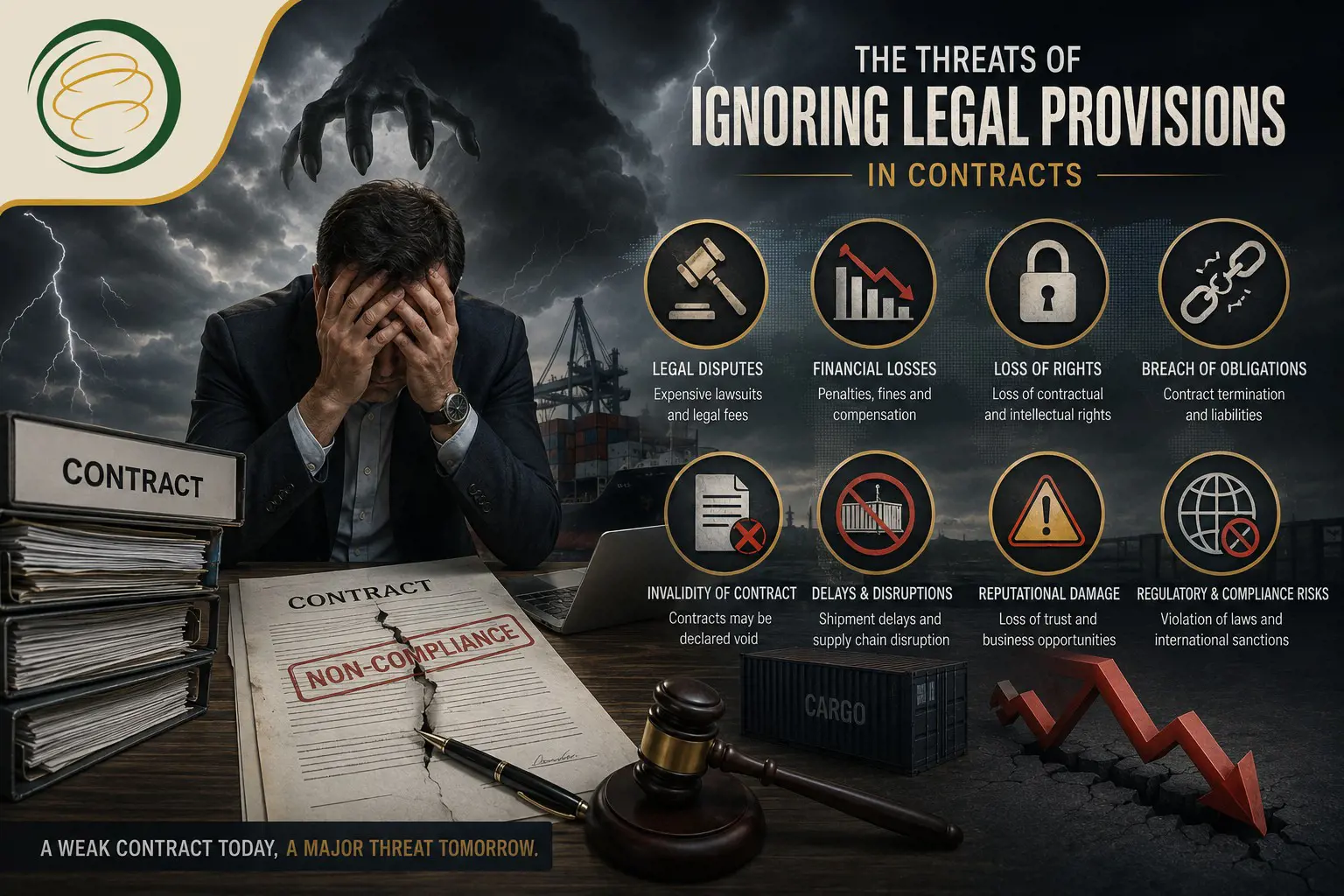
The Hidden Traps in Business Contracts: How Traders Can Be Misled by the Fine Print
In international trade, not every scam begins with a fake company, a forged document, or a vanished business partner. Sometimes, the most dangerous trap is hidden in a document that looks completely legitimate: the contract itself.
A trader may spend months negotiating prices, payment terms, delivery schedules, and business opportunities. Everything may appear clear and professional, until a dispute arises. At that moment, the trader may discover that the contract they signed was carefully structured to transfer most of the risk, cost, and liability onto them.
One of the most common traps is vague contractual language. Expressions such as “reasonable time,” “acceptable quality,” or “subject to market conditions” may sound harmless. However, if these terms are not clearly defined, they can later be interpreted in a way that benefits one party and disadvantages the other.
Another major risk is one-sided liability. A trader may face penalties for delays or minor breaches, while the other party has limited responsibility for its own failures. In some contracts, one side may even have the right to terminate the agreement under vague conditions, leaving the trader with significant financial losses after investing time, money, and resources.
Payment terms can also become a serious trap. A trader may be required to manufacture goods, arrange transportation, or complete delivery before receiving payment, without sufficient guarantees or protection against default. By the time the warning signs become clear, the goods may already be in the hands of the buyer.
Other risks can be hidden in attachments, standard terms and conditions, or clauses that receive little attention during negotiations. A single paragraph may determine who is responsible for transportation costs, insurance, currency fluctuations, legal expenses, or unexpected damages.
In international trade, traders must also pay close attention to governing law and dispute resolution. Winning a dispute may mean very little if the contract requires legal action or arbitration in a distant country where the costs of pursuing a claim are greater than the value of the transaction itself.
The most important lesson is simple:
A contract is not just a record of an agreement—it is a document that distributes risk.
Before signing, every trader should ask: Who carries the risk? Who controls termination? What happens if payment is delayed? And does the final written contract truly reflect what was negotiated?
In global business, the fine print can sometimes be more dangerous than the deal itself.
WBO Times | Threats Lurking
WBO Trade Risk & Compliance Desk
Practical Knowledge for Safer International Trade