




UNGA 2026 and the Future of Global Trade
The 81st United Nations General Assembly is taking place at a critical moment for the global economy. As world leaders gather in New York, their statements are highlighting a fundamental transformation in international trade: economic relations are becoming increasingly shaped by geopolitics, national security, technology and strategic competition.
The traditional model of globalization was largely built around efficiency, market access and the free movement of goods, capital and services. Today, governments and businesses are placing greater emphasis on resilience, economic security and the risks associated with excessive dependence on particular countries or supply chains.
This shift is particularly visible in trade policy. Tariffs, export controls, investment restrictions and technology policies are increasingly being used not only for economic purposes but also as instruments of broader geopolitical strategy. For businesses, this means that decisions about production, sourcing and market entry must increasingly incorporate geopolitical and regulatory risk.
The World Trade Organization's 2026 World Trade Report has highlighted the potential economic costs of deeper fragmentation. According to WTO simulations, a geopolitically fragmented global economy could significantly reduce global GDP and international trade. The report reinforces a broader concern: the weakening of multilateral trade cooperation could increase uncertainty and impose substantial costs on businesses and consumers.
Europe has continued to emphasize the importance of a rules-based multilateral trading system, while China has placed growing emphasis on development, digital trade and international economic cooperation. Developing economies, meanwhile, are seeking greater participation in global economic decision-making and greater access to technology, capital and higher-value segments of international production.
Technology is becoming another defining dimension of global trade. Artificial intelligence, digital platforms, data flows, semiconductors and cybersecurity are increasingly strategic economic assets. As governments develop different regulatory approaches to these technologies, regulatory fragmentation itself could become a new form of trade barrier.
Energy remains equally important. Geopolitical conflicts can affect oil and gas markets, shipping routes, insurance costs and transportation, creating a chain reaction that reaches inflation, interest rates, investment and global growth.
The broader message emerging from UNGA 2026 is therefore not simply about trade volumes. It is about the future architecture of economic interdependence.
The world economy may be moving neither toward complete globalization nor complete deglobalization, but toward managed interdependence—a system in which countries remain economically connected while attempting to reduce strategic vulnerabilities.
For global businesses, the implication is clear: understanding markets increasingly requires understanding geopolitics, technology, regulation and supply-chain networks together.
The future of global trade will ultimately depend on how effectively the international system can balance openness, resilience, economic security and predictable rules in an increasingly complex global economy.
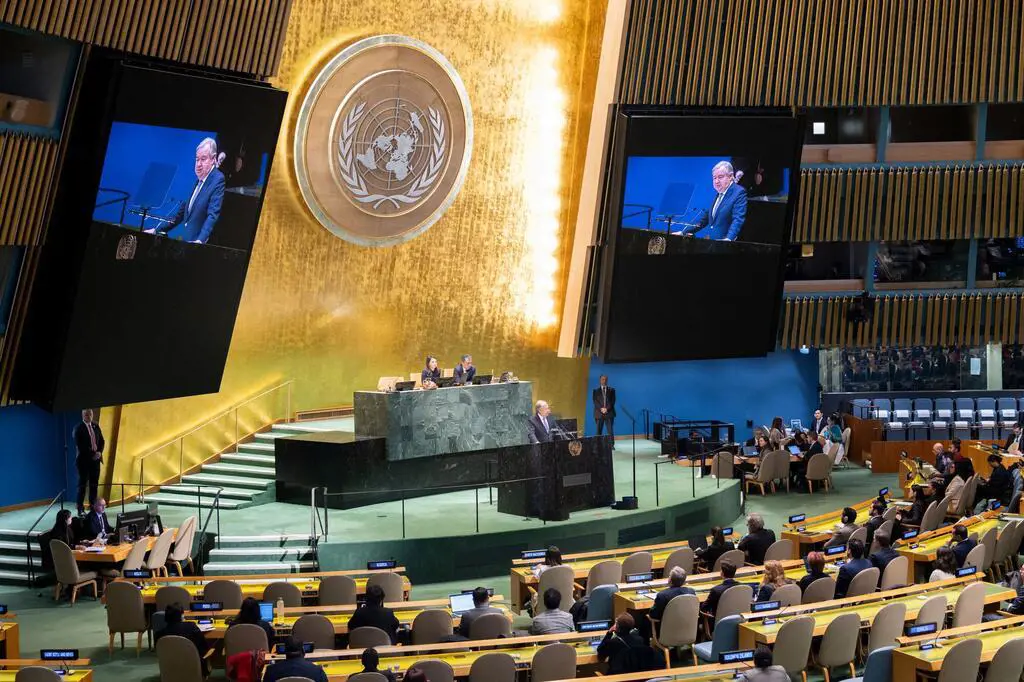
World leaders at UNGA 2026 are signaling a profound shift in global economic governance, as trade, geopolitics, technology, energy and supply-chain security become increasingly interconnected.
Font Size
1x
Reading time: 3 min