




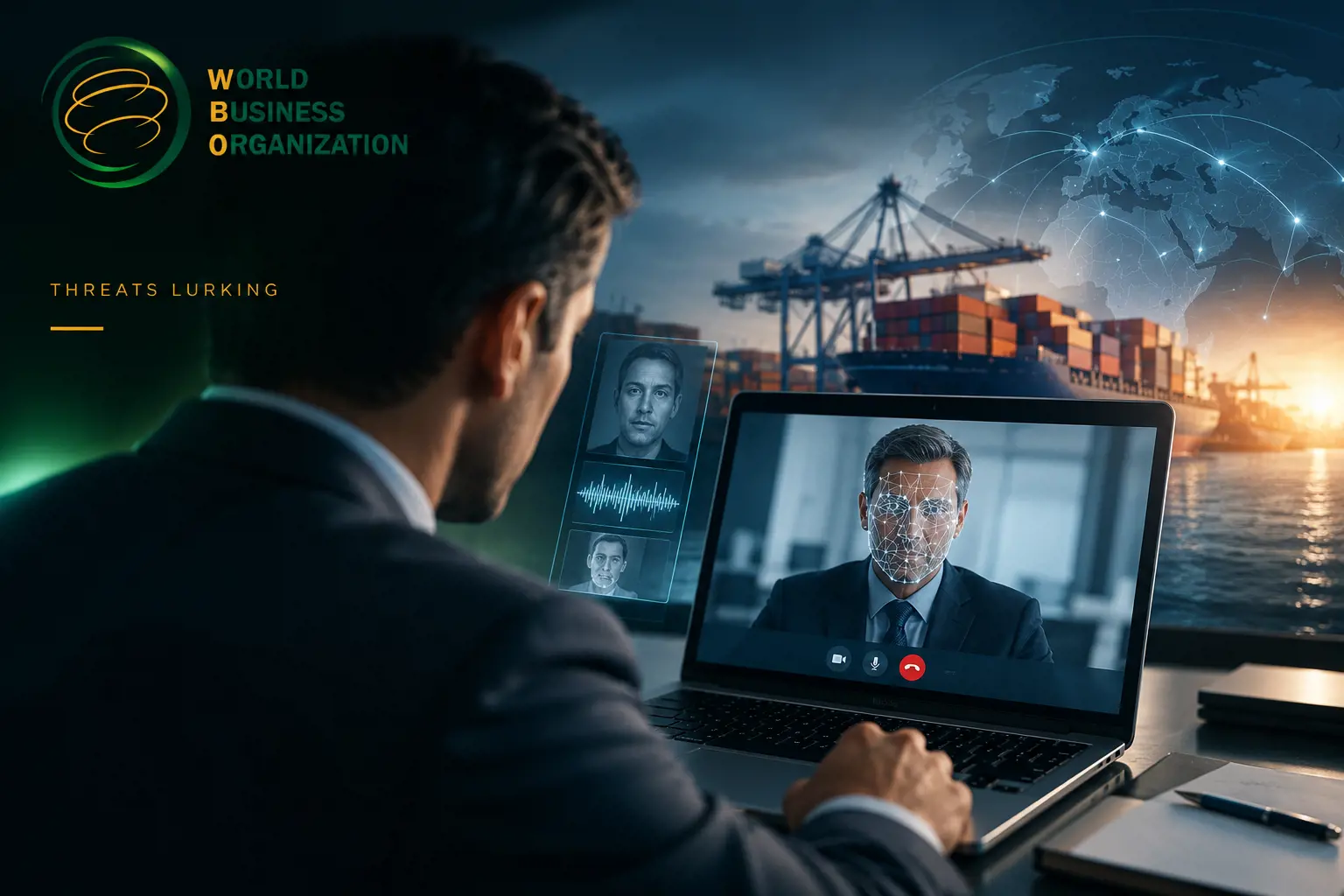
The Deepfake Executive Trap
International trade fraud is entering a new phase: the person on the screen may not be the person you think you are speaking to.
Fraudsters can now combine stolen corporate information, compromised email accounts, cloned voices, AI-generated images and deepfake video to impersonate company executives, suppliers, buyers or financial representatives. INTERPOL’s 2026 global financial fraud assessment identifies impersonation and Business Email Compromise among significant forms of financial fraud, while INTERPOL and UNODC have highlighted the growing use of generative AI, including deepfake video, audio and images, to impersonate trusted individuals.
Imagine an importer negotiating a multimillion-dollar transaction with what appears to be the CEO of an established foreign company. The video call looks normal. The voice sounds familiar. The company website is genuine. Previous emails appear authentic.
Then, during the final stage of the transaction, the “CEO” instructs the importer to change the beneficiary bank account or approve an urgent payment.
The problem is that everything may have been engineered to create trust before the payment request appears.
Red Flags
- A senior executive suddenly becomes directly involved in payment instructions.
- The counterparty insists on video calls as “proof of identity.”
- Bank details change shortly before payment.
- Unusual urgency or secrecy surrounds the transaction.
- The executive refuses an independent callback through established corporate channels.
- The communication style or commercial behavior suddenly changes.
- Payment approval is requested through a new device, number or communication platform.
Practical Controls
1. Never treat a video call as identity verification.
A face and voice can no longer be considered sufficient evidence of identity.
2. Verify through an independent channel.
Contact the company using a previously verified telephone number or established corporate contact—not information supplied during the suspicious communication.
3. Separate identity verification from payment authorization.
Even a genuine executive should not be able to bypass established payment controls.
4. Reconfirm every bank-account change.
Use dual authorization and independent confirmation before transferring funds.
5. Compare behavior, not just documents.
Sudden changes in language, urgency, communication patterns or transaction instructions can be important risk indicators.
WBO Trade Risk Education
World Business Organization (WBO) emphasizes that modern trade due diligence must move beyond checking documents, websites and corporate registrations. Human identity, digital identity and transaction behavior must increasingly be assessed together.
Through its practical education and trade-risk activities, WBO can help traders understand emerging fraud techniques, establish independent verification protocols and build transaction controls designed for an environment where digital evidence itself can be manipulated.
Golden Rule:
A convincing face, voice or video call is not proof of identity. Verify independently before money moves.
WBO Times | Threats Lurking
WBO Trade Risk & Compliance Desk
Practical Knowledge for Safer International Trade