


The Federal Reserve’s Interest Rate Policy: Reshaping the Global Economy and the Emerging World Order
October 18, 2026 | Global Economic Analysis | World Business Organization (WBO)
A Monetary Decision with Worldwide Consequences
The United States Federal Reserve's monetary policy has consequences far beyond the American economy. Because the U.S. dollar remains the dominant international reserve currency and a principal instrument of global trade and finance, changes in American interest rates influence borrowing costs, investment decisions, currency valuations, and capital flows across continents.
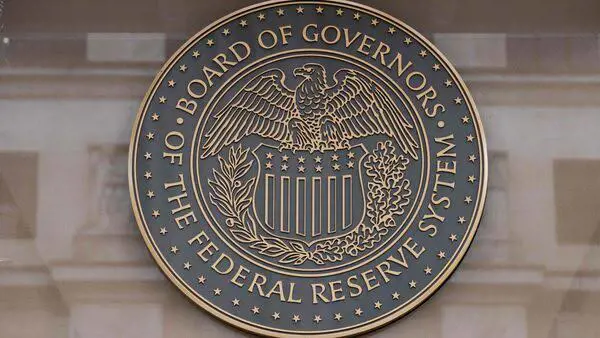
On September 16, 2026, the Federal Reserve raised its benchmark federal funds rate by 0.25 percentage points, establishing a target range of 3.75% to 4.00%. The decision reflected continuing concerns about inflation, which remains above the central bank’s 2% objective. With policymakers assessing incoming economic data ahead of their next meeting, the direction of U.S. monetary policy has become a critical consideration for governments, investors, and international businesses.
How U.S. Interest Rates Reshape Global Markets:
Higher American interest rates can make dollar-denominated assets more attractive to international investors, potentially redirecting capital toward U.S. financial markets. For emerging economies, this can create pressure on domestic currencies, increase the cost of servicing dollar-denominated debt, and constrain investment in infrastructure, manufacturing, and business development.
The consequences extend to international commerce. Higher financing costs can make trade credit more expensive, discourage investment in production capacity, and place additional pressure on businesses operating with narrow profit margins. Countries dependent on imported energy, food, industrial inputs, or external financing may face particularly difficult policy choices.
These dynamics also influence the distribution of economic power. Economies with deep financial markets, strong currencies, and substantial access to capital generally possess greater capacity to absorb monetary shocks than countries with limited financial resources. Consequently, decisions made by a single central bank can influence the economic opportunities available to businesses and governments worldwide.
Monetary Policy and the Emerging World Order:
The interaction between financial power, technological capabilities, trade relationships, and access to investment increasingly shapes the international economic order. Federal Reserve decisions are one important component of this transformation, although their effects depend on domestic policies, geopolitical developments, commodity prices, and decisions made by other central banks.
For governments and businesses, the strategic challenge is to reduce excessive exposure to external financial shocks without undermining the benefits of international economic integration.
The WBO’s Strategic Response:
The World Business Organization (WBO) can contribute by strengthening international business networks, facilitating access to alternative markets, and promoting structured dialogue between private-sector leaders, financial experts, and economic policymakers.
Practical priorities include encouraging businesses to assess currency and interest-rate exposure, diversify financing sources, strengthen contractual safeguards, and improve financial risk management. The WBO can also facilitate international discussions on trade financing, investment resilience, and the effects of monetary policy on developing economies.
The objective is not to challenge the monetary independence of the Federal Reserve, but to help businesses and economies adapt to its international consequences.
In an increasingly interconnected world, economic resilience requires more than reacting to financial decisions made by major powers. It requires stronger cooperation, better-informed business strategies, and international institutions capable of connecting markets, expertise, and opportunity.
Sources for Editorial Verification
- Federal Reserve: September 16, 2026, FOMC Statement — Official confirmation of the interest-rate increase and the new target range.
- International Monetary Fund: World Economic Outlook Update, July 2026 — Analysis of global growth, inflation, and international financial conditions.
- International Monetary Fund: 2026 Article IV Consultation: United States — Analysis of U.S. monetary policy, international capital flows, the dollar, and global economic spillovers.