


Europe and the Redefinition of Global Trade Rules
News and Analysis | World Trade and Economic Policy
The European Union is entering a new phase of trade and economic policymaking, increasingly prioritizing industrial competitiveness, economic security, supply-chain resilience, and strategic autonomy. These priorities reflect mounting pressure from geopolitical tensions, high energy costs, intensifying competition with China, and uncertainty in transatlantic trade relations. The emerging approach could reshape international trade flows, investment decisions, and the regulatory environment facing businesses worldwide.
From Trade Liberalization to Strategic Protection
One of the most significant developments is the EU’s growing willingness to strengthen trade-defense measures against imports it considers economically disruptive. On October 16, 2026, European Commission President Ursula von der Leyen announced plans to consider additional restrictions on Chinese imports, following an agreement concerning hybrid vehicle shipments. European leaders have also discussed potential measures affecting chemicals, plastics, and other industrial sectors, alongside mechanisms to reduce dependence on individual foreign suppliers. The Commission is expected to present further proposals in December.
Meanwhile, the EU continues expanding its network of preferential trade agreements. Agreements involving Mercosur, India, Australia, Mexico, and other partners demonstrate that Europe is pursuing a dual strategy: protecting sensitive industries while diversifying export markets and securing access to critical resources. This combination of selective protection and international market expansion could redirect investment and production toward countries offering more favorable market access and stronger regulatory alignment.
Environmental regulation is another important dimension. The Carbon Border Adjustment Mechanism (CBAM), operational since January 2026, introduces carbon-related costs for imports in covered sectors, including iron and steel, cement, fertilizers, aluminum, electricity, and hydrogen. Its implications extend beyond European borders, encouraging exporters to improve emissions measurement, production efficiency, and environmental reporting.
Implications for Global Trade
These policies could accelerate the fragmentation of global supply chains, increase compliance costs, and encourage regional production networks. Exporters that depend heavily on European markets may face additional requirements concerning carbon emissions, product standards, supply-chain transparency, and trade-defense investigations.
However, the transition also creates opportunities for countries capable of supplying competitively priced industrial inputs, cleaner products, critical raw materials, and specialized services. Businesses that anticipate regulatory changes and diversify their commercial partnerships will be better positioned to adapt.
The World Business Organisation’s Strategic Response
For the World Business Organisation (WBO), these developments reinforce the importance of practical international business coordination. Its approved initiatives, including Global Trade Skills Standardization, Trade Code issuance based on actual commercial activities, and the Global Network of Secure Smart Trade Cities, provide potential foundations for a coordinated response.
The immediate priority should be to develop a European Trade Policy Observatory that monitors regulatory changes, identifies emerging market opportunities, and translates complex requirements into actionable guidance for private-sector businesses. WBO should also promote standardized trade competencies, transparent commercial identification, and structured dialogue between European institutions, international businesses, and other trading partners.
The strategic objective is not to oppose Europe’s policies, but to help businesses navigate them, reduce uncertainty, and preserve opportunities for international cooperation. Through evidence-based analysis, practical standards, and cross-border business dialogue, WBO can strengthen its role as a facilitator of more predictable, resilient, and inclusive global trade.
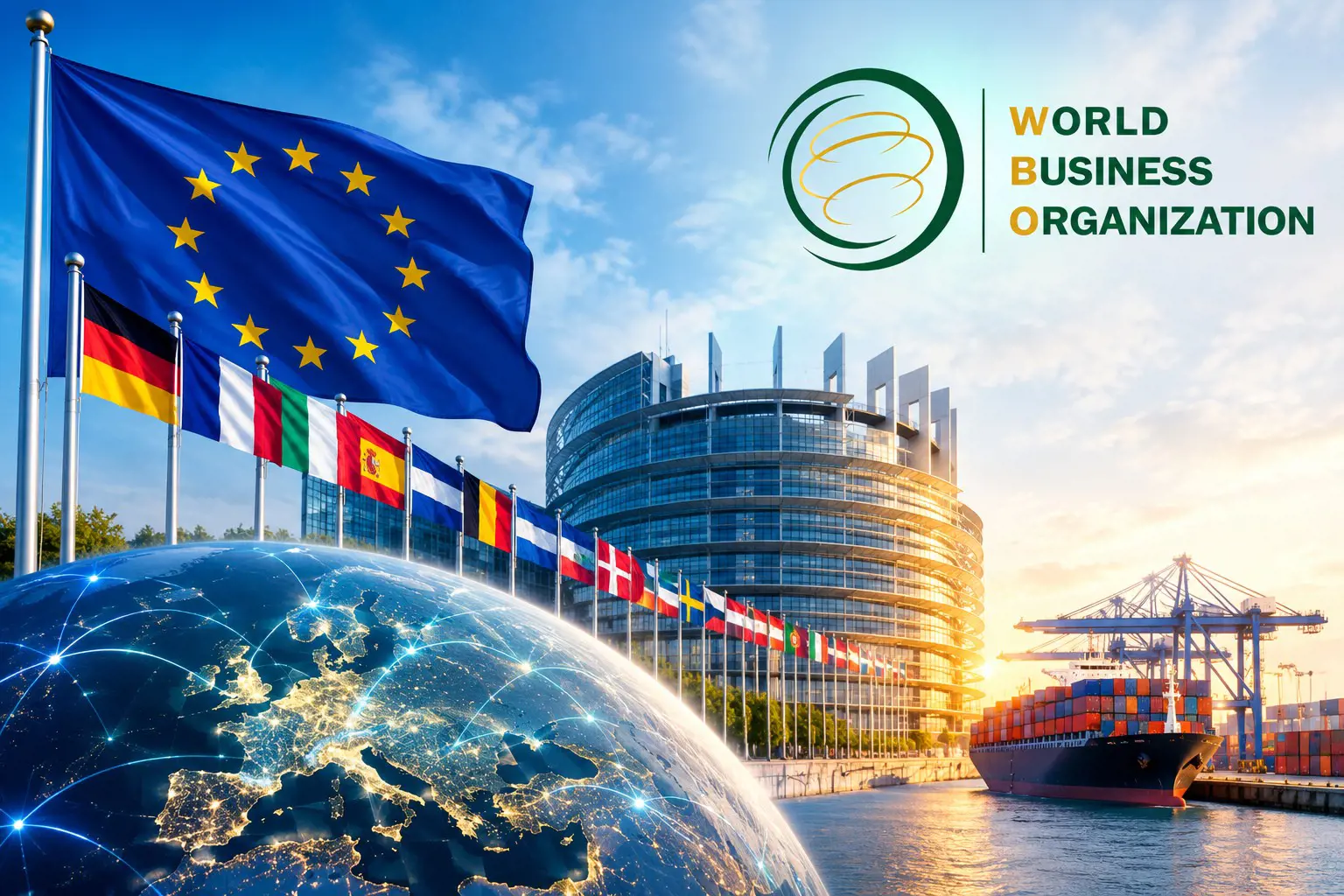
The European Union is reshaping global trade through stronger trade-defense measures, strategic supply-chain diversification, expanding trade agreements, and carbon-related import requirements. This analysis examines the implications for international commerce and outlines how the World Business Organization can help businesses navigate regulatory changes, identify emerging opportunities, and strengthen global trade cooperation.
Font Size
1x
Reading time: 3 min