



Global Markets: Emerging Threats and Economic Uncertainty
News and Analytical Report | International Economics and Trade
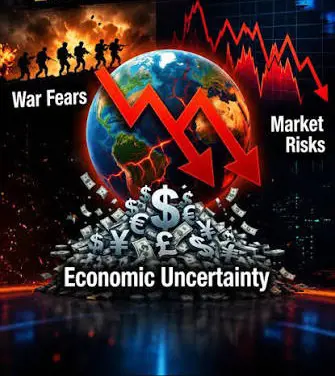
In 2026, global markets are facing a combination of economic, geopolitical, and structural threats that could reshape investment patterns, international trade, and economic growth across countries. Escalating trade tensions, disruptions to supply chains, energy market volatility, mounting fiscal pressures on governments, and the concentration of investment in emerging technologies are among the key factors contributing to growing uncertainty about the future of global markets.
According to the International Monetary Fund’s October 2026 report, global economic growth for the current year is projected at 3.1%. However, escalating trade tensions, intensifying geopolitical conflicts, and financial vulnerabilities could undermine the global economic outlook. Meanwhile, UN Trade and Development (UNCTAD) has estimated global economic growth at 2.6%. This difference highlights the considerable uncertainty surrounding assessments of the global economy’s near-term prospects.
Five Major Threats Facing Global Markets
1. Intensifying Trade Competition and Economic Restrictions
Rising tariffs, export controls on technology, investment restrictions, and the use of industrial policies to safeguard economic security have made the international trading environment increasingly complex. These developments could increase transaction costs, restrict companies’ access to foreign markets, and complicate long-term investment decisions.
2. Energy Crises and Disruptions to Trade Routes
Tensions in the Middle East and disruptions to strategic maritime transport routes, particularly the Strait of Hormuz and the Bab el-Mandeb Strait, have heightened the risk of rising energy, insurance, and transportation costs. These developments could increase production costs, intensify inflationary pressures, and weaken consumer purchasing power across different economies.
3. Financial Vulnerabilities and Mounting Debt
Higher financing costs and limited fiscal resources, particularly in developing economies, could constrain infrastructure investment and limit the expansion of productive economic activities.
4. Concentration of Investment in Technology and Artificial Intelligence
The rapid expansion of investment in artificial intelligence has created new economic opportunities. However, the concentration of capital and elevated valuations in certain technology sectors are increasing the risk of sharp asset price corrections and the transmission of financial shocks to other markets.
5. Declining Market Predictability
The combination of regulatory changes, exchange rate volatility, climate-related risks, and political developments is making long-term business planning increasingly difficult and reinforcing the importance of effective risk management.
The World Business Organization’s Strategies and Initiatives
Under these circumstances, the World Business Organization (WBO) can help reduce uncertainty by strengthening private-sector coordination and building the infrastructure needed for commercial cooperation.
The first priority is to develop a Global Markets Monitoring System to identify emerging trade risks, regulatory changes, investment opportunities, and supply chain disruptions at an early stage.
In addition, implementing a Global Trade Skills Standardization Program and developing a system for issuing trade codes based on the actual business activities of enterprises could enhance transparency and facilitate the identification of reliable commercial partners.
The development of a Global Network of Secure Smart Trade Cities could also, within the framework of the Organization’s future projects, contribute to establishing new infrastructure for trade, logistics, and cooperation among international companies.
Alongside these initiatives, the Organization can facilitate direct dialogue among business leaders, experts, and decision-makers through international interactive forums, enabling participants to identify shared challenges and develop practical solutions.
Conclusion
The future of global markets depends not merely on whether economic indicators rise or fall, but also on the ability of countries and businesses to manage risk, diversify markets, and adapt to structural changes.
The World Business Organization can contribute to strengthening business resilience by developing market-monitoring tools, commercial standards, and international cooperation networks. However, the effectiveness of these initiatives will depend on their gradual transition from the design and approval stages to securing the necessary resources and achieving operational implementation.