




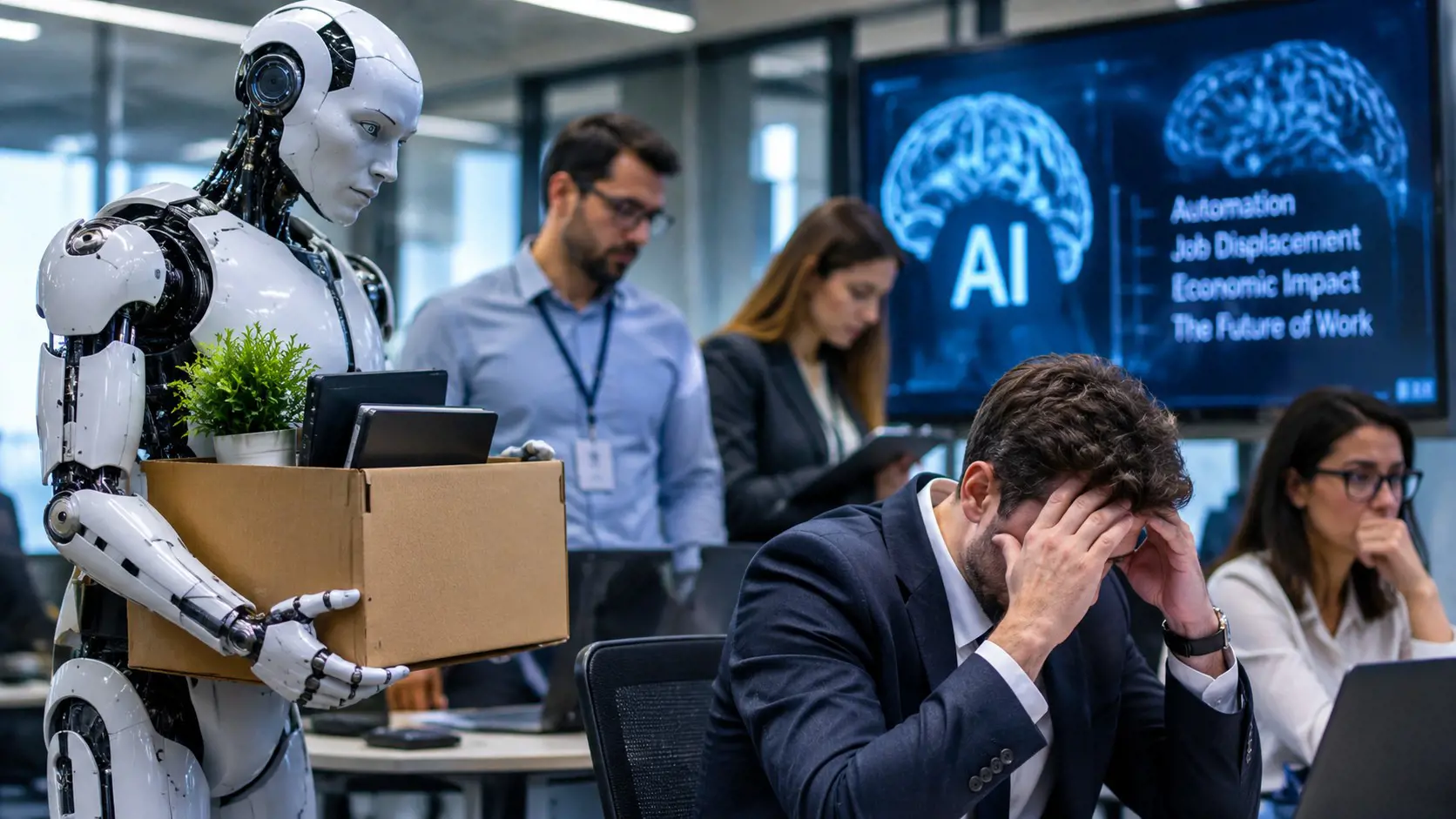
The Psychological Cost of the AI Revolution
Beyond Automation: The Human Side of Artificial Intelligence
Artificial intelligence is increasingly influencing how people work, make decisions, and perceive their professional future. While businesses are benefiting from automation, higher productivity, and reduced operational costs, the psychological consequences of this transformation are becoming an important concern for employers and policymakers.
A growing number of employees are experiencing uncertainty about their long-term professional value. For many, the challenge is no longer simply learning new technologies but understanding whether their existing skills and experience will remain relevant in an AI-driven economy.
According to Gallup's 2026 workplace research, 18% of employed Americans believe their jobs are somewhat or very likely to disappear within five years because of technological developments. This figure rises to 23% among employees working in organizations that have implemented AI. In finance and insurance, the reported concern reaches 32%.
Professional Identity and Workplace Anxiety
The psychological effects differ across industries. Financial analysts, accountants, designers, journalists, programmers, legal professionals, and administrative employees increasingly face questions about the future of their occupations.
For experienced professionals, AI may create a sense of declining professional value after years of developing specialized expertise. Younger employees face a different challenge: traditional entry-level positions, which historically provided opportunities to acquire professional experience, may become increasingly automated.
Another emerging concern is workplace isolation. As organizations replace human interaction with automated systems, employees may experience reduced collaboration, weaker professional relationships, and a diminished sense of belonging.
A 2026 study published in Frontiers in Public Health, examining 424 Chinese employees, identified job insecurity and workplace loneliness as two pathways associated with psychological distress among employees using generative AI.
Financial Markets and Corporate Behaviour
These psychological changes can also influence economic performance. Employees experiencing persistent uncertainty may demonstrate lower engagement, reduced creativity, and greater resistance to organizational change.
For businesses, the consequences can include higher employee turnover, recruitment expenses, reduced organizational commitment, and difficulties retaining experienced professionals.
Investors may also need to reconsider how they evaluate companies adopting AI. Productivity gains and lower labour costs do not automatically translate into sustainable profitability if organizations experience declining workforce engagement or lose essential human expertise.
WBO's Strategic Approach: Human Capital in the AI Economy
The World Business Organization (WBO) recognizes that technological transformation must be accompanied by institutional, educational, and economic adaptation.
WBO's strategic priorities include developing international professional education programmes, promoting standardized AI-related business competencies, facilitating cooperation between universities and enterprises, and supporting the transition of workers into emerging professional fields.
Through its proposed Global Network of Secure Smart Trade Cities (GN-SSTC), WBO also aims to create interconnected environments for professional development, research, technological cooperation, and international business education.
The Future Must Remain Human-Centred
The central challenge of the AI revolution is not simply how much human labour technology can replace, but how societies can preserve human dignity, professional purpose, economic participation, and psychological well-being while benefiting from technological progress.
Economic development cannot be measured exclusively through productivity and corporate profitability. The psychological and social sustainability of the workforce must also become an essential component of future economic policy.