




Business Failure and the Psychology of Recovery
Bankruptcy: More Than a Financial Collapse
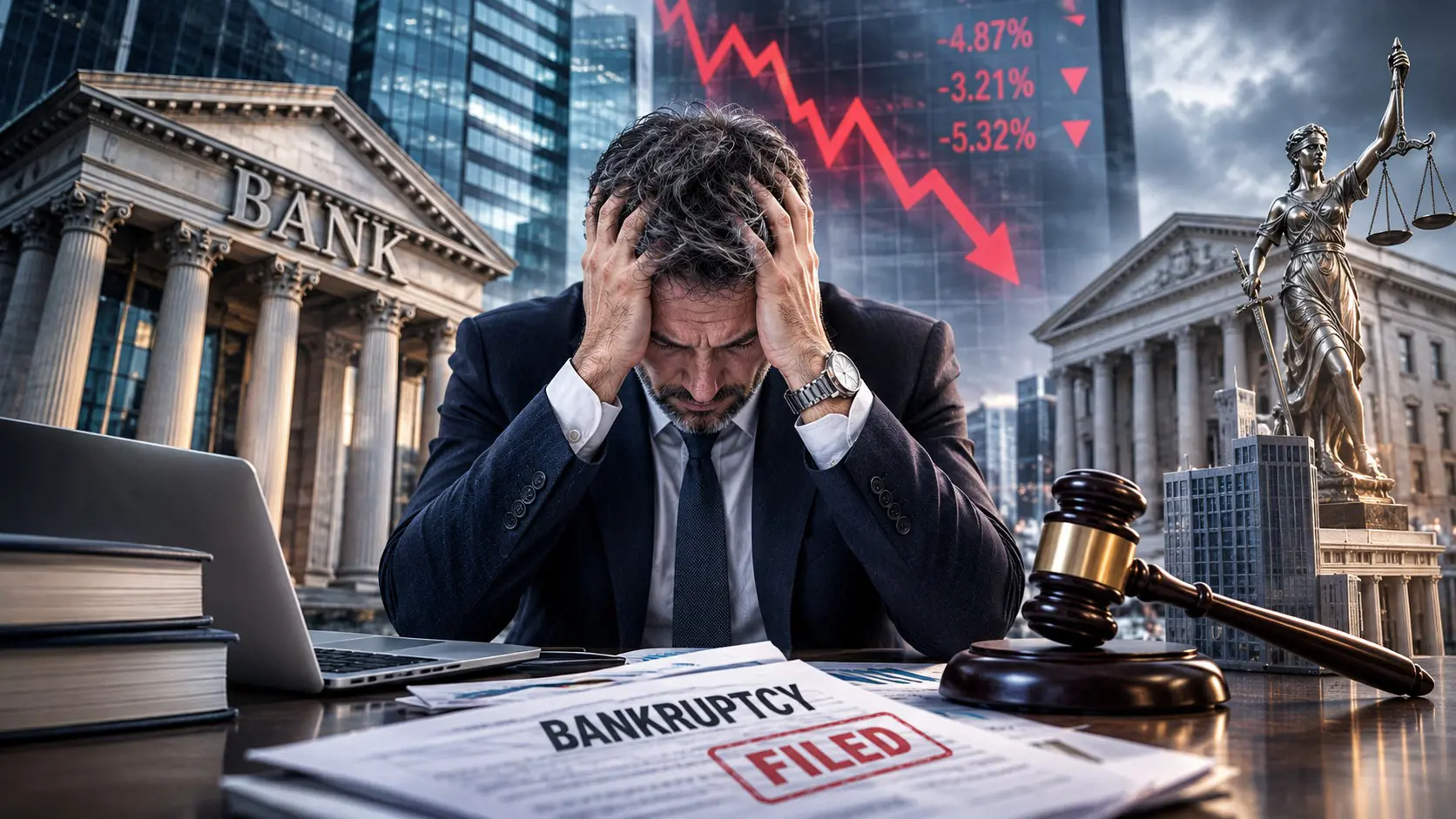
Business failure is commonly measured through unpaid debts, lost investments, declining revenues, and insolvency proceedings. However, behind every failed business is an individual whose professional identity, financial security, social relationships, and personal confidence may have been deeply affected.
For many entrepreneurs, a business represents years of personal investment, ambition, reputation, and responsibility. Its collapse can therefore generate feelings of shame, guilt, anxiety, social isolation, and loss of purpose.
A 2025 study published in Business Research Quarterly, examining entrepreneurs from 51 financially distressed businesses in Germany alongside 51 control participants, found substantially lower psychological well-being and higher stress indicators among entrepreneurs affected by insolvency. More than 67% of the affected entrepreneurs recorded well-being scores indicative of depression, compared with 4% of the control group. These findings illustrate that business insolvency can become a serious personal and psychological crisis.
The Social Consequences of Entrepreneurial Failure
The consequences frequently extend beyond the entrepreneur. Families may experience financial instability, emotional pressure, disrupted relationships, and uncertainty about their future. Employees lose their income, suppliers face unpaid obligations, and business partners may suffer financial losses.
Another significant consequence is social stigma. In many societies, bankruptcy is interpreted as a personal failure rather than an economic event that can result from market instability, geopolitical disruptions, poor financial conditions, or unsuccessful business decisions.
This perception discourages experienced entrepreneurs from returning to commercial activities, depriving economies of valuable knowledge, professional networks, and accumulated business experience.
The Hidden Risk: Returning Before Psychological Recovery
One of the most underestimated risks following bankruptcy is premature re-entry into the business market.
An entrepreneur who has not adequately recovered may make decisions driven by fear, urgency, excessive risk-taking, or the psychological need to compensate for previous losses. Such behaviour can result in poor financial judgment, inappropriate partnerships, excessive borrowing, and repeated business failure.
Research published in the British Journal of Management in 2024 highlights the relationship between negative emotional experiences following business failure and subsequent personal growth. It also suggests that accumulated failure experiences and unresolved emotional responses can interfere with recovery and future entrepreneurial development.
Financial restructuring alone is therefore insufficient. The reintegration process should include psychological recovery, rebuilding professional confidence, learning from past mistakes, and restoring decision-making capacity.
WBO's Strategic Approach: Rebuilding Entrepreneurial Capacity
The World Business Organization (WBO) recognizes that sustainable economic development requires more than supporting successful businesses. Economies must also establish mechanisms that help entrepreneurs recover from failure and return to productive economic participation.
WBO's strategic priorities include promoting entrepreneurial education, professional development, financial literacy, business risk management, and international commercial cooperation.
Through its proposed global business network, WBO aims to facilitate access to new markets, professional networks, investment opportunities, and educational resources, helping entrepreneurs rebuild their commercial capabilities.
A Second Chance Is an Economic Asset
Business failure should not automatically mean the end of an entrepreneurial career. The ability to recover, learn, and return with improved judgment is an important component of a resilient economy.
The real measure of an economic system is not only how effectively it supports successful businesses, but also how effectively it helps capable individuals recover from failure and contribute again.
Restoring the entrepreneur is not merely a social responsibility; it is an investment in future economic productivity.