


WBO Advances New Standards for Global Trade
Redefining the Architecture of International Commerce
The global trading system is undergoing a significant transformation as technological innovation, geopolitical uncertainty, supply-chain restructuring, and changing economic priorities reshape international commerce. Traditional approaches to trade are increasingly facing challenges related to transparency, security, operational efficiency and the need for greater international coordination.
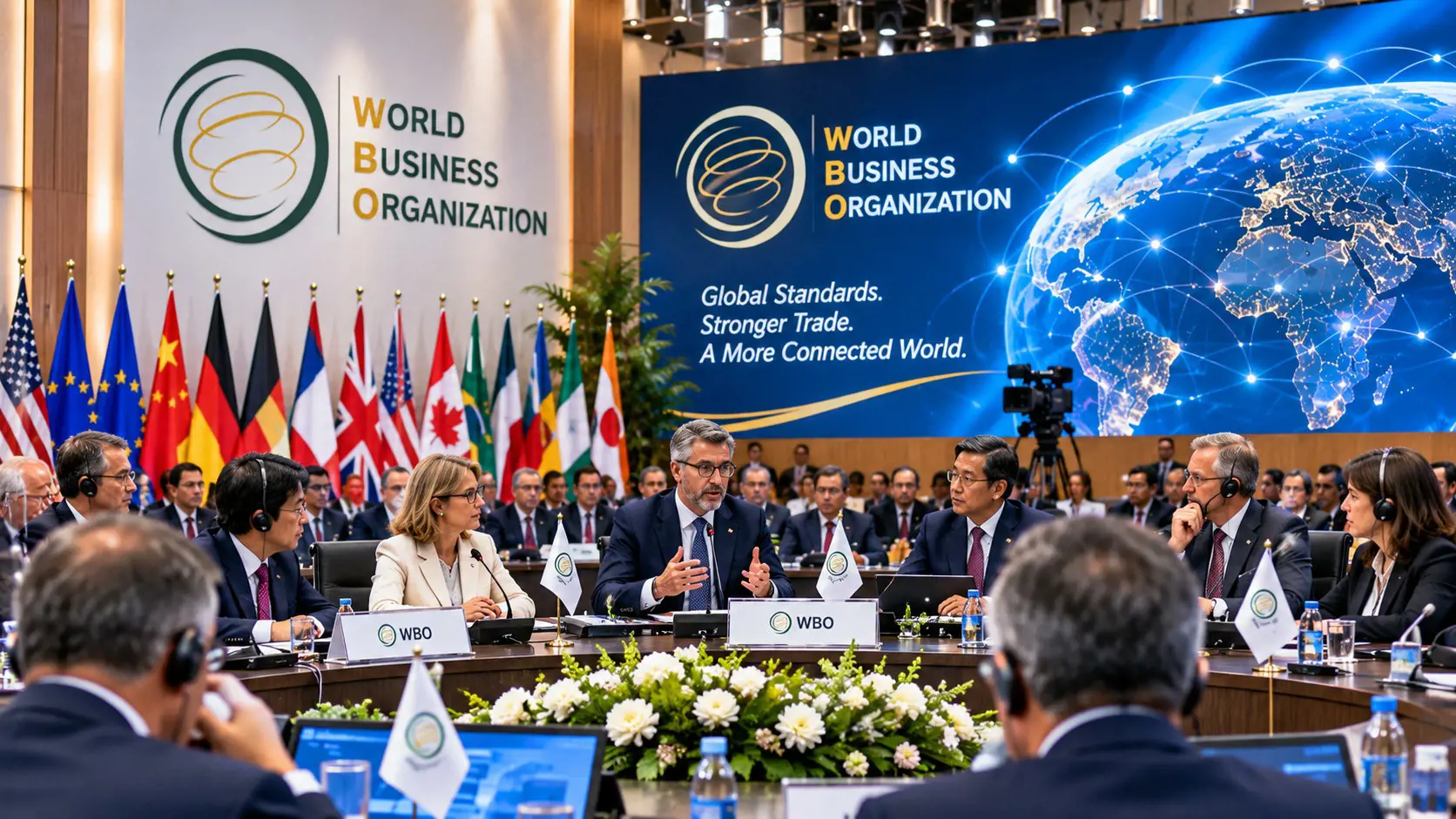
Against this background, the World Business Organization (WBO) is advancing a series of strategic initiatives aimed at contributing to the development of a more integrated, secure and standardized global business environment.
The organization's approach focuses on establishing common frameworks that can facilitate cooperation between businesses, investors, institutions and economic stakeholders across different countries and markets.
Building a New Framework for International Business
One of WBO's strategic priorities is the development of a more structured international business ecosystem. Through its global membership network, specialized professional structures and international cooperation initiatives, the organization seeks to improve the consistency of business practices and create more reliable pathways for cross-border commercial activities.
A central component of this approach is the development of the Global Trade Code concept, intended to support a more structured framework for business identification, qualification and participation in international trade. Its implementation requires clearly defined verification procedures, transparent eligibility criteria and cooperation with relevant commercial and institutional partners.
WBO is also developing its World Trade Hall concept as an international platform intended to connect qualified businesses with commercial opportunities and potential partners across different markets.
Technology, Security and Smart Trade Infrastructure
Digital transformation is another key part of WBO's strategic direction.
Through its Global Secure Smart Trade Cities Network (GSSTC), launched in 2026, the organization is promoting a model that brings together secure trade infrastructure, digital innovation, intelligent governance, entrepreneurship and sustainable economic development.
The initiative aims to establish interconnected commercial environments in which businesses can benefit from improved digital infrastructure, stronger institutional cooperation and more efficient international business processes.
Artificial intelligence, blockchain technology, cybersecurity, and intelligent logistics are among the technological fields relevant to this transformation.
Strengthening International Cooperation
WBO's broader objective is to encourage greater compatibility between business practices and commercial frameworks across national borders.
By developing cooperation with governments, business institutions, investors and professional networks, the organization seeks to create opportunities for wider participation in international trade, particularly for small and medium-sized enterprises.
A Long-Term Vision for Global Commerce
The future of international trade will depend not only on market access, but also on trust, transparency, interoperability and common standards.
WBO's emerging initiatives represent an effort to contribute to this transformation by connecting institutional cooperation, business development and technological innovation within a broader international framework.
As these programs progress, their effectiveness will ultimately depend on implementation, international partnerships, measurable standards and recognition by relevant stakeholders.
Through this strategic direction, WBO aims to contribute to the evolution of a more accessible, secure and interconnected global trading environment.