




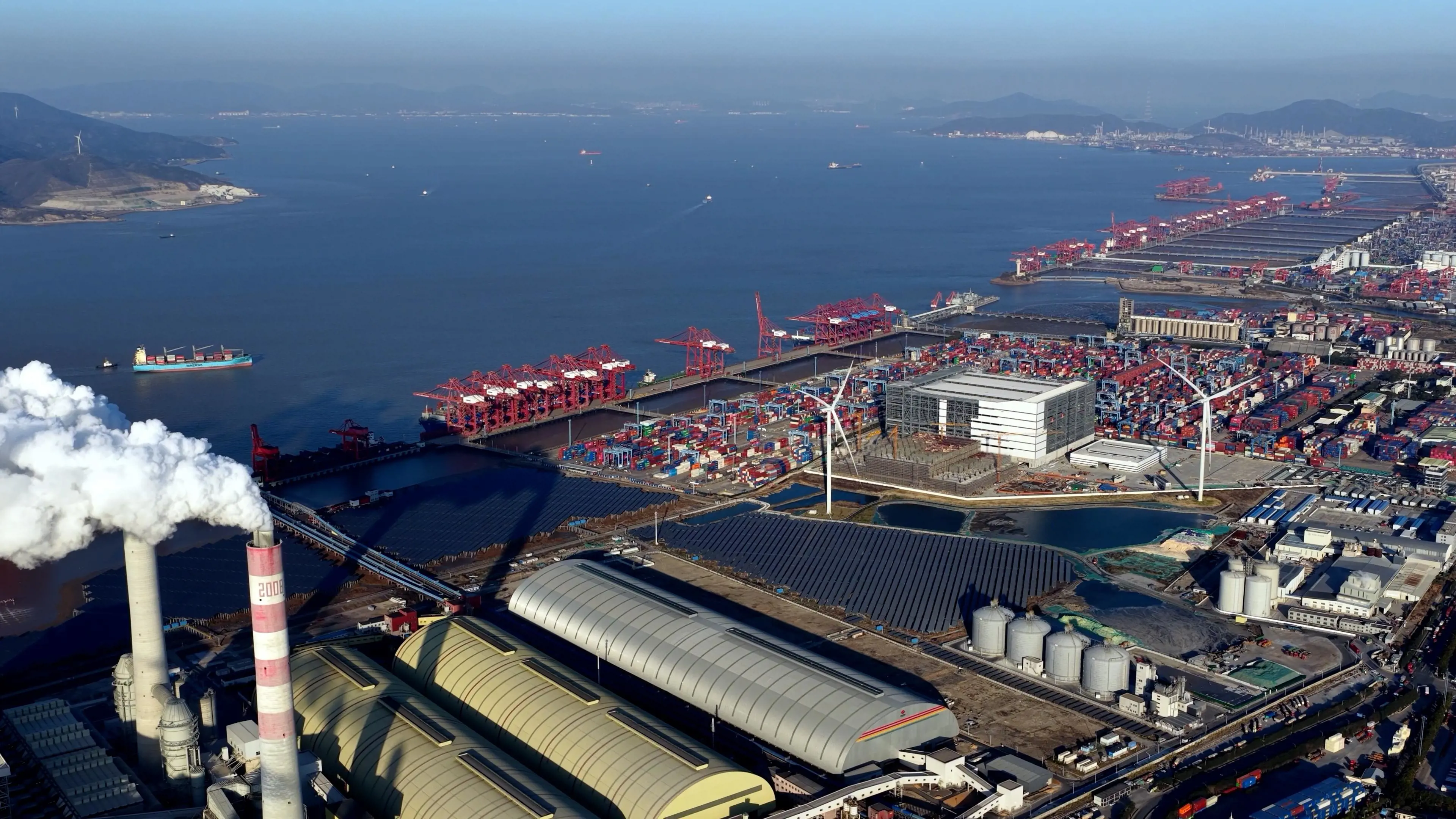
The New Geography of Global Business: How AI Is Reshaping Economic Power and International Trade
The Global Economy Is Entering a New Era of Infrastructure Competition
The global business landscape is undergoing a fundamental transformation. Artificial intelligence is no longer simply a technology-sector opportunity; it is becoming a powerful force reshaping international trade, industrial investment, energy markets, and the geographical distribution of economic power.
While much of the public discussion focuses on AI software and digital platforms, a more consequential competition is developing behind the scenes: the race to control the physical infrastructure that makes artificial intelligence possible.
Semiconductors, advanced memory systems, data centers, electricity networks, cooling technologies, and specialized industrial equipment are becoming strategic assets in the emerging global economy.
1. The New Industrial Gold Rush
The expansion of artificial intelligence is generating extraordinary demand for physical infrastructure.
Technology companies are investing heavily in data centers, advanced computing systems, semiconductor manufacturing, and high-capacity communication networks.
According to the October 2026 DHL Globalization Tracker, developed in cooperation with NYU Stern, AI-related demand has become a major driver of international trade. Goods used to build AI infrastructure accounted for 76% of goods trade growth in the first quarter of 2026, according to the report's cited WTO and OECD analysis.
This development is changing the traditional structure of global commerce. Countries supplying advanced chips, memory components, electronic equipment, and industrial systems are gaining strategic importance in international supply chains.
2. South Korea's Strategic Position in the AI Economy
South Korea provides an important example of how technological specialization can translate into international economic influence.
Companies such as Samsung and SK Hynix occupy central positions in the global memory semiconductor industry.
Recent discussions between OpenAI leadership and Samsung executives in South Korea highlight the growing importance of securing reliable memory supplies for large-scale AI infrastructure projects.
The emerging competition is no longer exclusively about developing the most advanced AI models. It is increasingly about securing access to the components required to operate them.
This creates opportunities for semiconductor manufacturers, industrial suppliers, equipment producers, and countries with advanced manufacturing capabilities.
3. Energy Is Becoming the New Strategic Currency
Behind every major data center is an enormous requirement for electricity, cooling, transmission infrastructure, and reliable energy supply.
As AI infrastructure expands, access to affordable and stable electricity is becoming an increasingly important factor in investment decisions.
This creates new opportunities for energy producers, electricity-grid developers, industrial engineering companies, and investors in energy storage and advanced power systems.
However, rising energy costs are also creating challenges.
Global manufacturing surveys for October 2026 indicate that higher energy and input costs are putting pressure on industrial margins, even as manufacturing activity remains in expansion territory.
For businesses, the cost of energy is becoming as important as access to capital, technology, and skilled labor.
4. Globalization Is Changing, Not Disappearing
Geopolitical competition, tariffs, and economic security concerns are encouraging companies to reconsider where they manufacture products and how they organize international supply chains.
However, the expansion of AI infrastructure demonstrates that international economic interdependence remains substantial.
The latest DHL research indicates that globalization reached a record level of 25.8% in 2026, despite geopolitical tensions and increasing trade restrictions.
The emerging model is not necessarily a retreat from globalization. Instead, international commerce is becoming more strategically organized around technological capabilities, reliable suppliers, and access to essential resources.
5. Where the Next Investment Opportunities May Emerge
The transformation of global business is creating investment opportunities across several interconnected industries:
-
Semiconductor manufacturing and advanced memory technologies.
-
Data-center construction and digital infrastructure.
-
Electricity generation, transmission, and energy storage.
-
Industrial automation and advanced manufacturing.
-
Cooling systems and energy-efficiency technologies.
-
Logistics, specialized transportation, and supply-chain management.
The most important opportunities may emerge not only among major technology corporations but also among smaller industrial suppliers and businesses supporting the infrastructure behind the AI economy.