




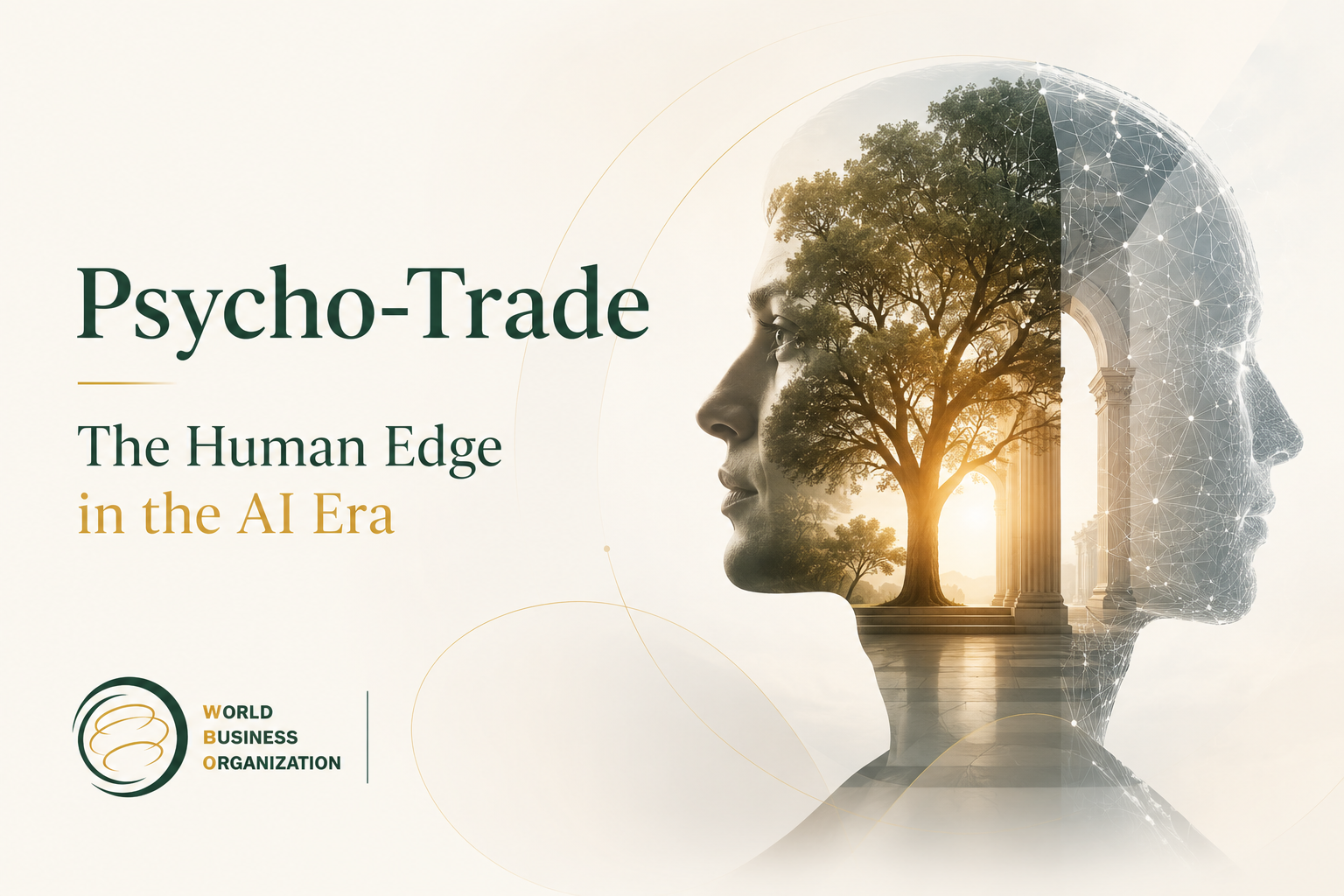
Emotional Intelligence: The Human Competitive Advantage in the Age of Artificial Intelligences
The rapid advancement of artificial intelligence is transforming the foundations of business, leadership, and decision-making. Today, AI systems can process vast amounts of data, generate sophisticated analyses, automate complex tasks, and even perform at levels comparable to human experts in certain domains. As these technologies become more powerful and accessible, organizations are increasingly able to automate technical and analytical functions that were once considered highly specialized. Yet this transformation raises an important question: if machines become better at processing information, what will remain uniquely valuable about human contribution?
According to Daniel Goleman, the psychologist who popularized the concept of emotional intelligence, the future will not belong solely to individuals with superior technical expertise. Instead, it will increasingly favor those who can understand and manage emotions, build trust, navigate complex relationships, and influence others effectively. Emotional intelligence encompasses self-awareness, self-regulation, empathy, communication, and relationship management—capabilities that continue to distinguish human beings from machines. While AI can generate recommendations, it cannot genuinely understand human motivation, interpret emotional nuance, or create meaningful interpersonal connections.
This distinction becomes particularly important in leadership. An AI system may identify organizational challenges and propose optimal solutions, but it cannot inspire confidence during uncertainty, resolve interpersonal tensions, or create a shared sense of purpose. In every organization, trust remains the foundation of cooperation, and trust is ultimately a human phenomenon. As technology assumes greater responsibility for analytical work, leaders who can unite people around common goals and cultivate strong organizational cultures will become increasingly valuable.
Furthermore, the widespread availability of AI is democratizing access to information and expertise. For decades, competitive advantage was often built on possessing knowledge that others lacked. Today, however, information is becoming abundant and increasingly accessible. In such an environment, the ability to interpret human needs, exercise sound judgment, negotiate effectively, and establish credibility becomes more important than merely possessing information. The future workforce will likely reward those who can transform knowledge into understanding and information into meaningful action.
Beyond the workplace, emotional intelligence is becoming a strategic economic asset. In international trade, investment, diplomacy, and global business partnerships, long-term success often depends not on technology alone but on the ability to build relationships across cultures and institutions. Markets may increasingly be driven by algorithms, but commercial trust continues to be built through human interaction. Organizations capable of combining technological sophistication with strong relationship-building capabilities will possess a significant advantage in navigating an increasingly interconnected world.
Perhaps the greatest paradox of the AI era is that the more intelligent machines become, the more valuable distinctly human qualities become. As automation expands, skills such as empathy, ethical judgment, adaptability, cultural awareness, and emotional resilience are likely to increase in importance rather than diminish. The future will not be defined by a competition between humans and artificial intelligence. Instead, it will be shaped by how effectively humans leverage technology while preserving and strengthening the capabilities that machines cannot replicate.
Ultimately, artificial intelligence may not reduce the importance of human abilities; it may reveal their true value. In a world where information is abundant and technology is ubiquitous, emotional intelligence could become the defining factor that separates effective leaders, successful organizations, and sustainable enterprises from the rest. The most successful individuals of the coming decades will not be those who simply understand technology, but those who understand people while using technology wisely.
Dr. Sara Mei
Psycho-Trade Think Tank Chairman