




WBO Strengthens Global Governance Framework
The World Business Organization (WBO) has introduced its comprehensive Governance and Operational Laws, establishing a unified institutional framework designed to reinforce transparency, accountability, and operational excellence across its global network.
Far beyond a set of internal regulations, the framework serves as the constitutional foundation of WBO’s governance model, defining the principles that guide ethical leadership, legal compliance, and professional conduct throughout all jurisdictions in which the organization operates. By aligning with internationally recognized governance standards, the initiative strengthens institutional integrity while promoting responsible and sustainable business practices.
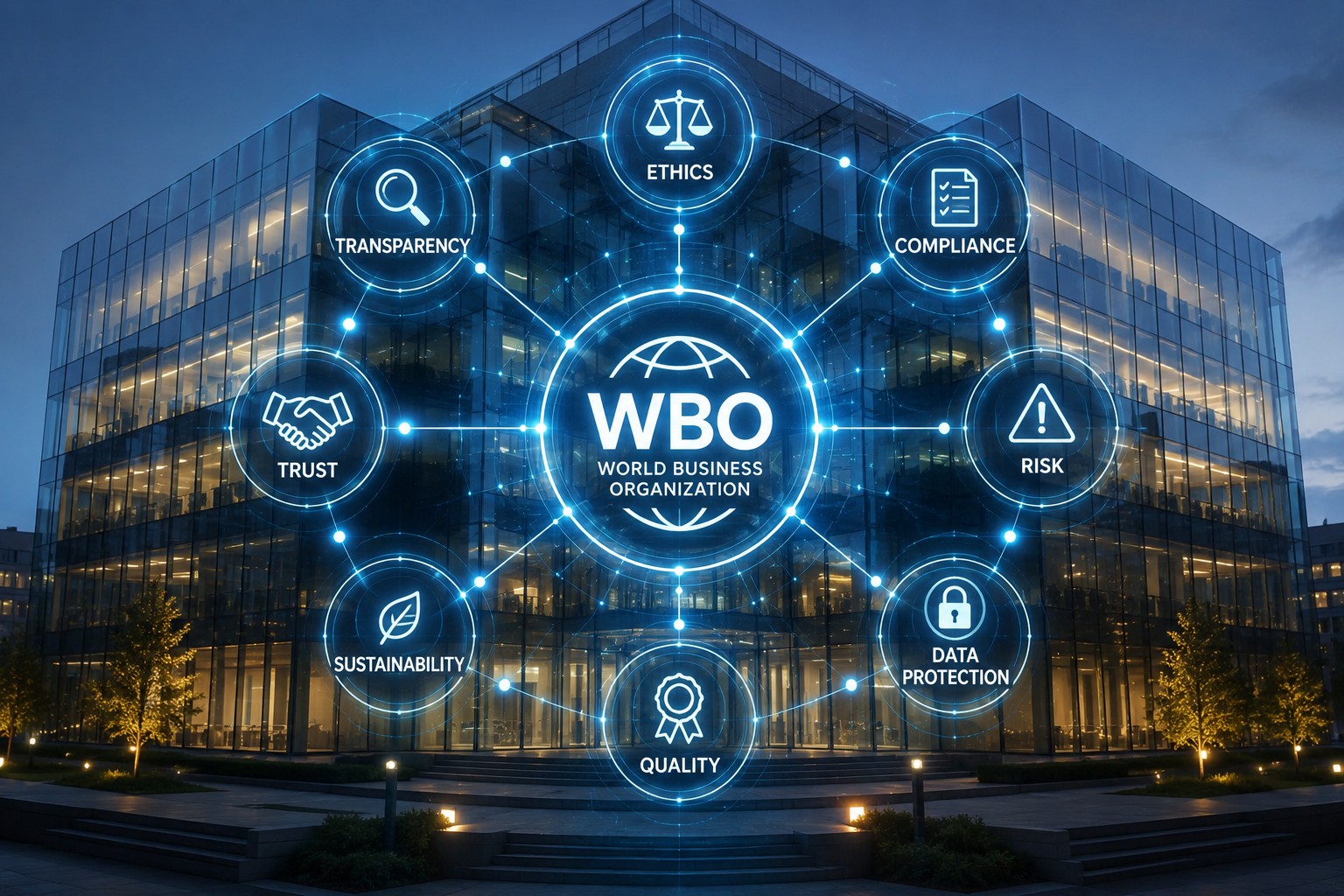
The governance framework incorporates key principles, including anti-corruption, conflict-of-interest management, transparency, diversity and inclusion, data protection, anti-money laundering measures, whistleblower protection, and environmental sustainability. These policies are intended to enhance organizational resilience and ensure full compliance with evolving international regulatory requirements.
On the operational side, the framework establishes clear standards for enterprise risk management, business continuity, quality assurance, contractual governance, supplier accountability, intellectual property protection, customer rights, and service excellence. In parallel, WBO emphasizes continuous professional development alongside employee health and safety, recognizing that institutional success ultimately depends on a highly skilled, secure, and adaptable workforce.
Collectively, the twenty Governance and Operational Laws represent a strategic milestone in WBO’s institutional development. By reducing legal and operational risks, strengthening stakeholder confidence, and embedding international best practices into every level of governance, the framework positions WBO as a trusted global institution committed to secure, ethical, and responsible international business. As global commerce continues to evolve, this governance architecture provides the stability, credibility, and long-term resilience required to support sustainable economic cooperation across borders.