




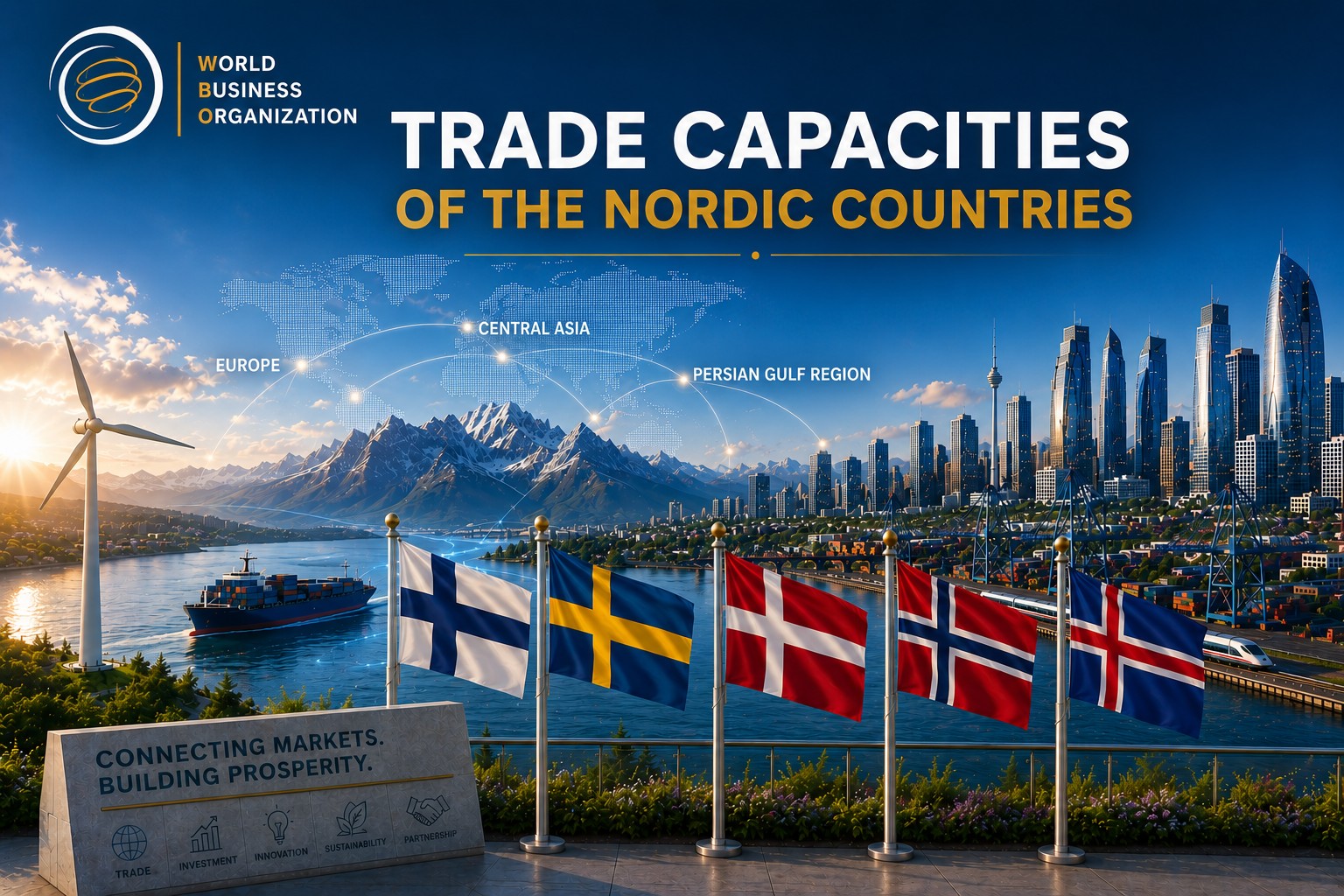
Nordic Economies Strengthen Their Position as Global Trade and Innovation Leaders
The Nordic region continues to reinforce its reputation as one of the world's most advanced and resilient economic blocs, attracting growing international attention for its leadership in innovation, sustainability, digital transformation, and global trade. Comprising Finland, Sweden, Norway, Denmark, and Iceland, the region has emerged as a strategic hub where economic stability, technological excellence, transparent governance, and high-value industries converge to create one of the most competitive business environments in the global economy.
Among the Nordic economies, Finland has further strengthened its position as a strategic gateway connecting Northern Europe, the Baltic region, and emerging Eurasian markets. Backed by a highly educated workforce, world-class research institutions, and advanced digital infrastructure, the country has successfully developed globally competitive industries in artificial intelligence, cybersecurity, telecommunications, clean technologies, biotechnology, health innovation, advanced manufacturing, and the circular economy. Finland's continued investment in research and development has reinforced its status as a leading knowledge-based economy capable of delivering high-value technological solutions to international markets.
The broader Nordic economic landscape presents equally impressive strengths. Sweden continues to lead in advanced industrial manufacturing, fintech, life sciences, and global entrepreneurship, while Denmark maintains its international prominence in pharmaceuticals, renewable energy, maritime logistics, and sustainable food technologies. Norway combines substantial financial resources with internationally recognized expertise in offshore energy, maritime industries, aquaculture, and emerging hydrogen technologies. Iceland, meanwhile, continues to leverage its abundant renewable energy resources and innovation-driven economy to expand opportunities across tourism, fisheries, and digital industries. Together, these complementary capabilities have positioned the Nordic region as one of the world's most integrated ecosystems for innovation, investment, and cross-border business collaboration.
International trade remains the cornerstone of Nordic economic success. Efficient logistics infrastructure, modern ports, advanced customs systems, digital governance, and highly transparent regulatory environments have enabled Nordic countries to maintain strong commercial relationships across Europe, North America, Asia, and rapidly expanding markets in the Middle East and Central Asia. These competitive advantages continue to attract international investors seeking secure, predictable, and sustainable business destinations capable of supporting long-term growth.
Looking ahead, the Nordic region is expected to play an increasingly influential role in shaping the future of global commerce. Accelerating investments in artificial intelligence, quantum computing, green energy, smart cities, digital governance, resilient supply chains, and next-generation industrial technologies are creating new opportunities for international cooperation and sustainable economic development. As governments and businesses worldwide seek reliable partners capable of navigating an increasingly complex global economy, Finland and its Nordic neighbors continue to demonstrate why they remain among the world's most trusted destinations for innovation, investment, and international trade.