




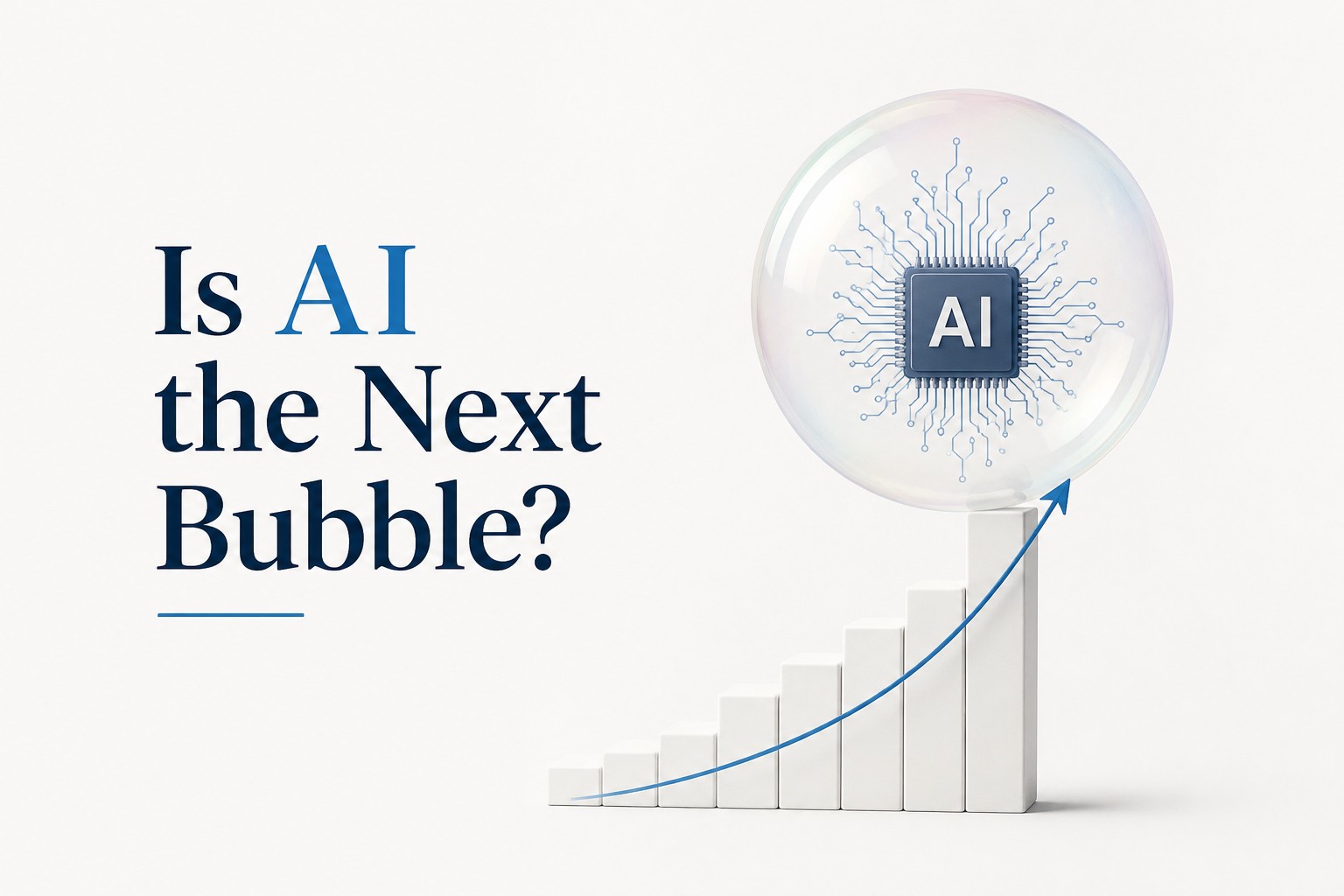
Artificial intelligence has rapidly evolved from a promising technology into one of the most powerful forces shaping the global economy. Governments are investing billions in AI infrastructure, technology companies are racing to develop increasingly sophisticated models, and investors continue to pour unprecedented amounts of capital into AI-driven businesses. Yet beneath this remarkable momentum lies a growing debate among economists, financial institutions, and market analysts: could the AI boom be creating the next major asset bubble?
The remarkable rise of AI has fueled extraordinary market valuations, particularly among semiconductor manufacturers, cloud computing providers, data center operators, and software developers. Stock markets have rewarded companies associated with artificial intelligence with record-breaking valuations, while venture capital firms continue to invest aggressively in emerging AI startups. Supporters argue that AI represents a transformational technology comparable to the internet or electricity, capable of generating decades of productivity growth and economic expansion.
However, history offers important lessons. Previous technological revolutions—from the dot-com boom to cryptocurrency speculation—demonstrated that innovation and excessive market optimism can coexist. When investment expectations become detached from commercial reality, financial markets become increasingly vulnerable to correction. Several international financial institutions have recently warned that elevated asset prices, concentrated investment, and growing corporate debt linked to AI expansion deserve careful monitoring.
At the same time, the long-term economic potential of artificial intelligence remains undeniable. AI is already improving healthcare, manufacturing, finance, logistics, education, and scientific research. Businesses that successfully integrate AI into their operations are likely to achieve higher productivity, lower operational costs, and greater competitiveness. The challenge is not whether AI will transform the economy, but whether current market expectations accurately reflect the pace and scale of that transformation.
For investors, policymakers, and business leaders, the central question is no longer whether artificial intelligence will reshape global markets—it already is. The more pressing issue is whether today's investment strategies are being driven by sustainable economic fundamentals or by speculative enthusiasm.
The answer will influence not only the future of technology companies but also the stability of global financial markets. As artificial intelligence continues its extraordinary rise, balancing innovation with prudent investment may become one of the defining economic challenges of the decade.