




China's Economy Enters a New Growth Phase
China's economic slowdown represents one of the most significant structural shifts in the global economy over the past decade. While annual growth rates have moderated compared to previous decades, the transition reflects a deliberate shift from investment-driven expansion toward a more balanced model centered on innovation, productivity, and high-value industries.
Several factors have contributed to this transformation. The prolonged adjustment in the real estate sector, changing demographic trends, softer external demand, and evolving global trade dynamics have placed increasing pressure on traditional growth engines. At the same time, geopolitical tensions and growing technology competition have accelerated China's efforts to strengthen domestic capabilities in strategic industries.
In response, Beijing has introduced policies designed to stimulate domestic consumption, support private enterprise, expand advanced manufacturing, and accelerate investment in artificial intelligence, semiconductors, electric vehicles, renewable energy, biotechnology, robotics, and digital infrastructure. These sectors are expected to become the primary drivers of China's next stage of economic development.
Despite slower headline growth, China remains one of the world's largest manufacturing centers and an essential participant in global supply chains. Its industrial ecosystem, logistics capacity, skilled workforce, and expanding innovation capabilities continue to attract significant international investment. At the same time, multinational companies are increasingly adopting diversified production strategies by expanding operations into Southeast Asia, India, Central Asia, and other emerging markets while maintaining substantial operations within China.
For global businesses, China's economic transition creates both opportunities and challenges. Companies that align with China's priorities in advanced technology, sustainable manufacturing, healthcare, digital services, and green energy are likely to benefit from continued market demand. However, businesses must also navigate evolving regulations, technological standards, and a more competitive operating environment.
Rather than signaling economic decline, China's current trajectory reflects a transformation toward higher-quality growth. The country's long-term competitiveness will increasingly depend on innovation, technological self-reliance, productivity gains, and the expansion of domestic consumption rather than rapid infrastructure-led investment.
Strategic Outlook
China is expected to remain one of the world's most influential economic powers, although with more moderate and sustainable growth. Future success will be driven by technological leadership, industrial modernization, and domestic market expansion. Businesses capable of adapting to China's evolving economic priorities while diversifying regional operations will be best positioned to benefit from future opportunities across Asia and beyond.
WBO Insight
China's economic transition should be viewed as a structural evolution rather than a cyclical slowdown. For governments, investors, and businesses, understanding this shift is essential for developing resilient long-term strategies in an increasingly interconnected global economy. Those who recognize China's continuing role in innovation, manufacturing, and regional trade will be better prepared to navigate the next phase of global economic transformation.
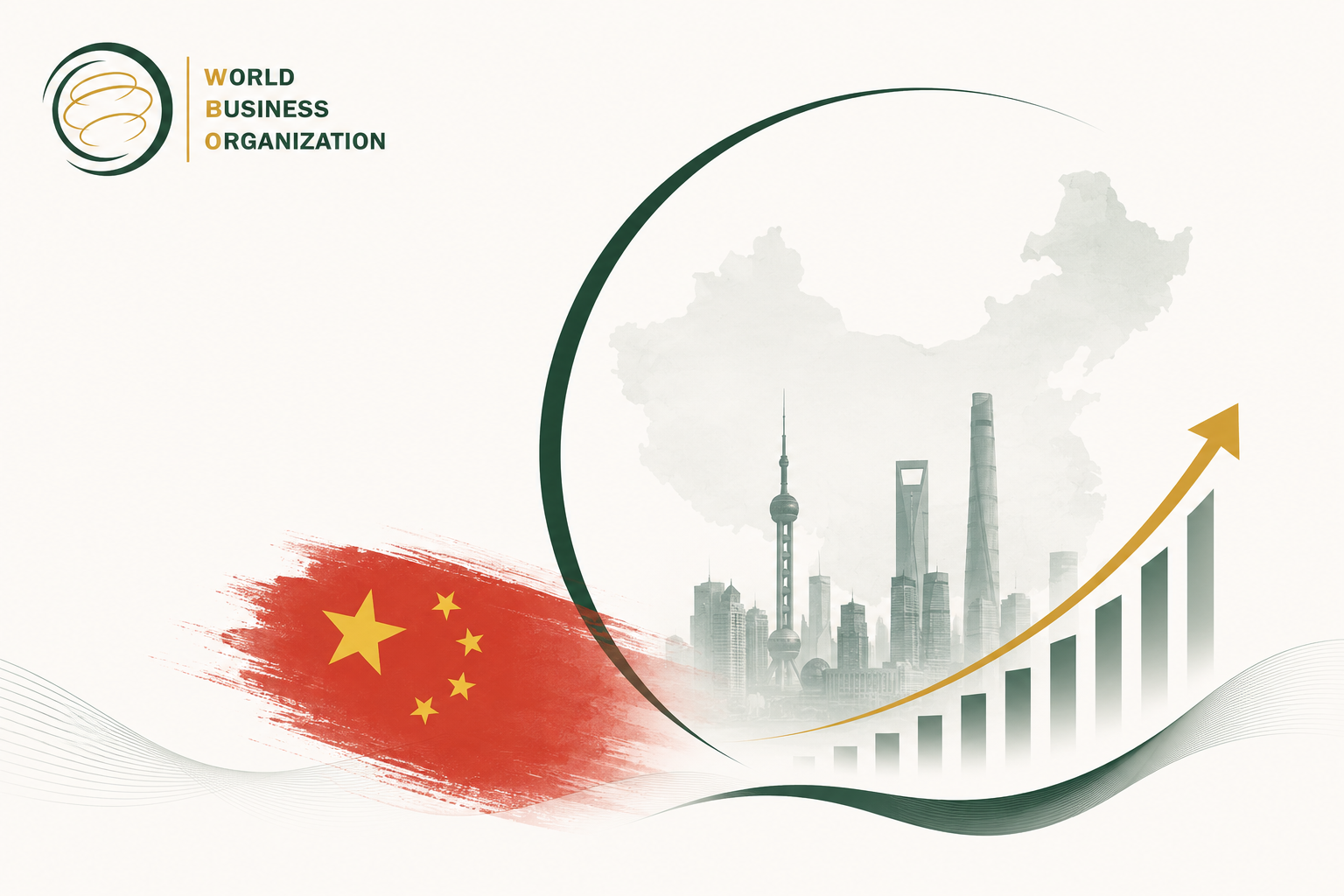
After decades of double-digit expansion, China's economy is transitioning into a slower but more sustainable growth model. Policymakers are prioritizing technological innovation, domestic consumption, advanced manufacturing, and economic resilience to navigate structural challenges while maintaining China's role as a major engine of global economic growth.
Font Size
1x
Reading time: 3 min