




Executive Stress in the Age of Artificial Intelligence: A New Psychological Challenge for Leaders
Artificial intelligence (AI) has transformed the way organizations operate, promising faster analysis, better predictions, and more informed decision-making. While these technological advances have improved efficiency, they have also introduced a new and often overlooked challenge:
The psychological pressure experienced by leaders. Contrary to the common assumption that AI reduces managerial stress, evidence suggests that it has fundamentally changed the nature of executive stress rather than eliminated it.
One of the primary sources of stress is information overload. Modern executives are expected to process vast amounts of data generated by AI systems, real-time dashboards, market analytics, and continuous digital communication. Instead of simplifying decisions, this constant flow of information increases cognitive load, making it more difficult to identify what truly matters. As a result, leaders face mental fatigue long before they reach a final decision.
Another important factor is the paradox of accountability. AI can recommend strategic actions, estimate risks, or forecast future outcomes, but it does not bear responsibility for the consequences.
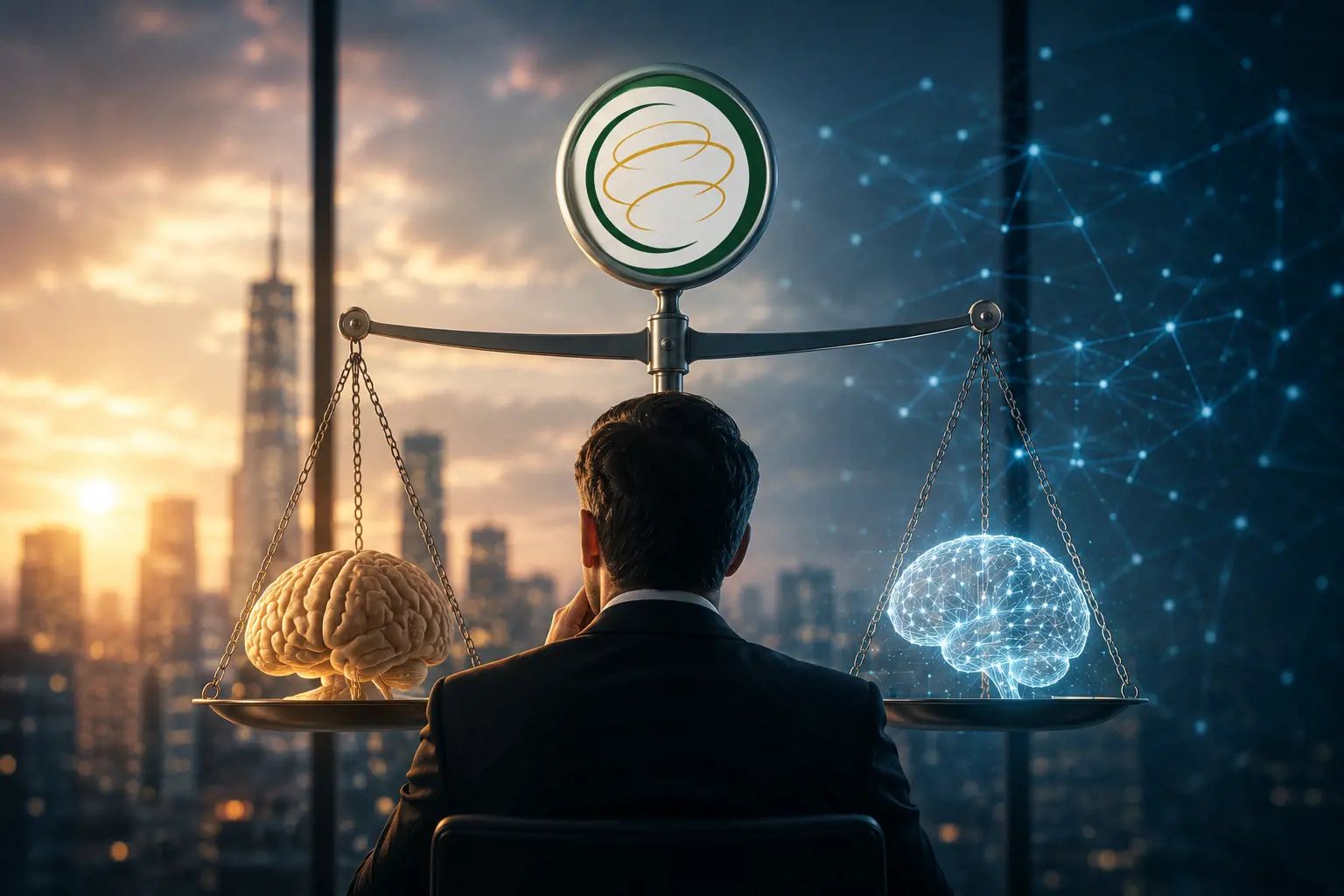
The final decision, and its potential success or failure, remains the responsibility of the executive. This creates a unique form of psychological tension in which leaders must balance confidence in algorithmic recommendations with their own professional judgment.
The rapid adoption of AI has also accelerated the pace of business. Decisions that once took days or weeks are now expected within hours. This compressed decision cycle leaves executives with less time for reflection, increasing emotional pressure and the likelihood of cognitive biases. Under chronic stress, leaders may become either excessively risk-averse, avoiding innovation, or impulsively risk-seeking in an attempt to recover from setbacks.
Another emerging concern is cognitive dependency. As managers increasingly rely on AI-generated insights, some may gradually lose confidence in their own intuition and experience. This phenomenon, often referred to as automation bias, can lead decision-makers to accept AI recommendations without sufficient critical evaluation. Over time, excessive dependence on Intelligent systems may weaken independent thinking and reduce strategic flexibility.
For organizations, these psychological challenges have significant implications. Executive stress can reduce creativity, impair judgment, slow innovation, and contribute to burnout. Therefore, successful AI adoption should not focus solely on technological capabilities but also on strengthening the psychological resilience of leaders.
The future of leadership will depend not only on access to advanced AI but also on the ability to combine human judgment with machine intelligence. Organizations that invest in executive resilience, critical thinking, and healthy human–AI collaboration will be better positioned to make sound decisions in an increasingly complex and uncertain world.
Dr. Sara Mei
Psycho-Trade Think Tank Chairman