




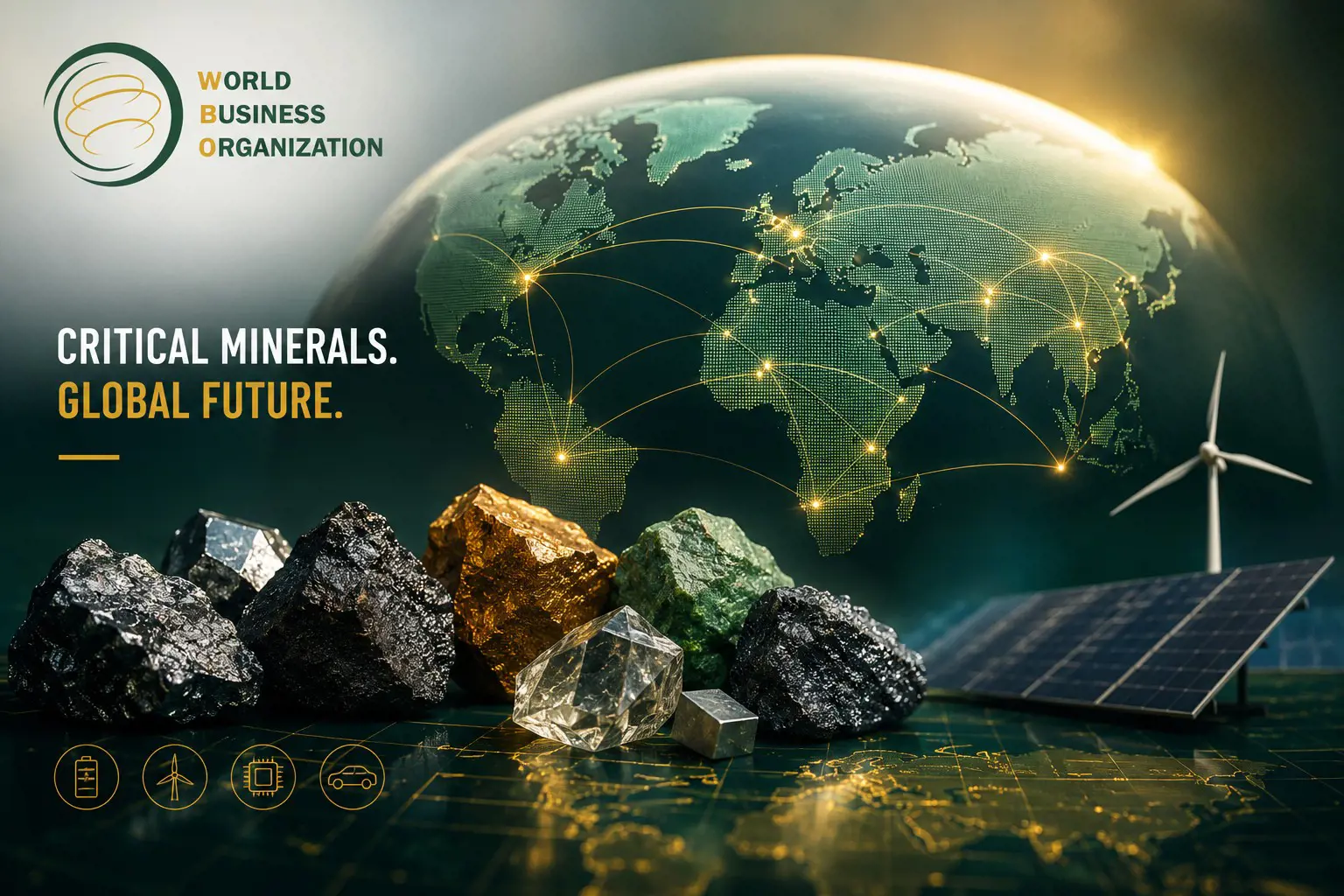
Critical Minerals Shape Global Competition
The global race for critical minerals has become one of the defining strategic challenges of the twenty-first century. Once viewed primarily as industrial commodities, minerals such as lithium, cobalt, nickel, graphite, and rare earth elements are now at the center of economic policy, national security planning, and technological innovation.
The rapid expansion of electric vehicles, renewable energy systems, advanced semiconductors, and artificial intelligence infrastructure has dramatically increased demand for these essential resources. As nations pursue ambitious decarbonization goals, access to reliable supplies of critical minerals is emerging as a decisive competitive advantage.
Governments are responding with comprehensive strategies aimed at strengthening domestic production, diversifying import sources, and investing in mineral processing capabilities. Strategic partnerships, long-term supply agreements, and overseas investments are becoming increasingly common as countries seek to reduce dependence on concentrated supply chains.
For businesses, the changing landscape presents both opportunities and risks. Mining companies are accelerating exploration projects, while manufacturers are redesigning supply chains to improve resilience and transparency. At the same time, investors are paying closer attention to geopolitical risks, environmental standards, and responsible sourcing practices when evaluating resource-related projects.
Sustainability remains a critical component of the discussion. While demand for critical minerals is driven largely by the global transition toward clean energy, expanding extraction activities raise important environmental and social considerations. Governments and industry leaders are therefore placing greater emphasis on responsible mining, recycling technologies, and circular economy initiatives to reduce long-term resource pressures.
Competition is no longer limited to resource ownership alone. Leadership in mineral refining, battery manufacturing, recycling technologies, and advanced materials processing is becoming equally important in determining economic influence. Countries capable of developing integrated value chains are expected to capture greater economic value while enhancing industrial resilience.
As the energy transition accelerates, critical minerals are evolving into strategic assets that will shape global trade, investment flows, and industrial policy for decades to come. The ability to balance resource security, environmental responsibility, and international cooperation will play a decisive role in defining the next generation of global economic leadership.
Prepared for publication by WBO Times.