



Threats Lurking: The Fake Inspection Certificate
In international trade, an inspection certificate can provide valuable assurance about the quality, quantity, condition, or conformity of goods. But when that document is forged or manipulated, it can create a false sense of security and expose a trader to significant financial loss.
One increasingly common fraud involves the presentation of a fake or manipulated inspection certificate that appears to have been issued by a reputable inspection company. Fraudsters may use genuine company names, logos, report numbers, signatures, stamps, and professional-looking formats to make the document appear authentic.
The certificate may claim that the goods have been inspected, that the quantity matches the contract, that the products meet specified quality standards, or even that the goods are physically available at a particular warehouse. In reality, the inspection may never have taken place—or the document may relate to a completely different shipment.
The Dangerous Assumption
A professional-looking certificate does not necessarily mean that an inspection actually occurred.
“There is an inspection certificate” does not mean “the goods have been independently verified.”
The real question is whether the certificate can be independently authenticated with the organization that allegedly issued it.
Practical Controls for Traders
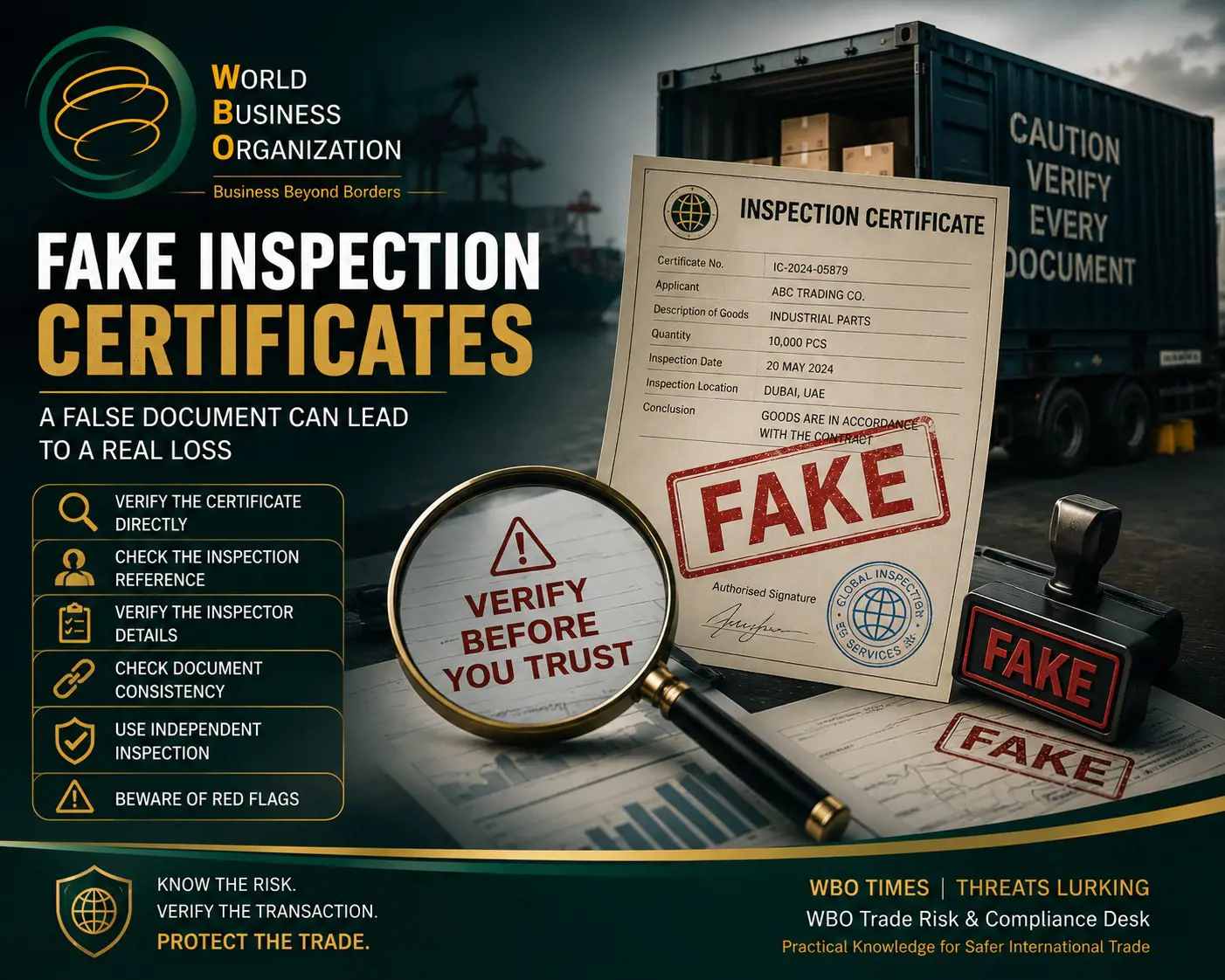
1. Verify the certificate directly.
Contact the inspection company using independently sourced contact information—not the telephone number, email address, or website provided on the certificate.
2. Verify the inspection reference.
Ask whether the inspection reference number, inspection date, location, and transaction actually exist in the inspection company's records.
3. Verify the inspector.
Where appropriate, confirm the inspector's identity, assignment, inspection location, and date.
4. Check the entire documentary chain.
The inspection certificate should be consistent with the commercial invoice, packing list, contract, specifications, shipment details, and other transaction documents.
5. Do not rely exclusively on seller-provided verification.
For high-value or high-risk transactions, consider an independently arranged inspection by a reputable inspection provider.
6. Treat inconsistencies as red flags.
Unusual formatting, inconsistent signatures, unexplained amendments, incorrect company details, or pressure to accept documents without verification should trigger enhanced due diligence.
WBO’s Practical Education Approach
The World Business Organization (WBO) emphasizes practical risk awareness as an essential component of modern international trade competence. Through its educational and knowledge-sharing activities, WBO aims to help traders understand not only what documents are required in international transactions, but also how to verify their authenticity and reliability.
WBO's practical training approach can include real-world fraud scenarios, document-review exercises, counterparty verification techniques, transaction checklists, and risk-identification procedures. The objective is to enable businesses to recognize warning signs before they commit funds, accept documents, or release goods.
The Golden Rule
Never verify a document using the information contained only in the document itself.
In international trade, documentation creates confidence—but independent verification creates protection.
WBO Times | Threats Lurking
WBO Trade Risk & Compliance Desk
Practical Knowledge for Safer International Trade