




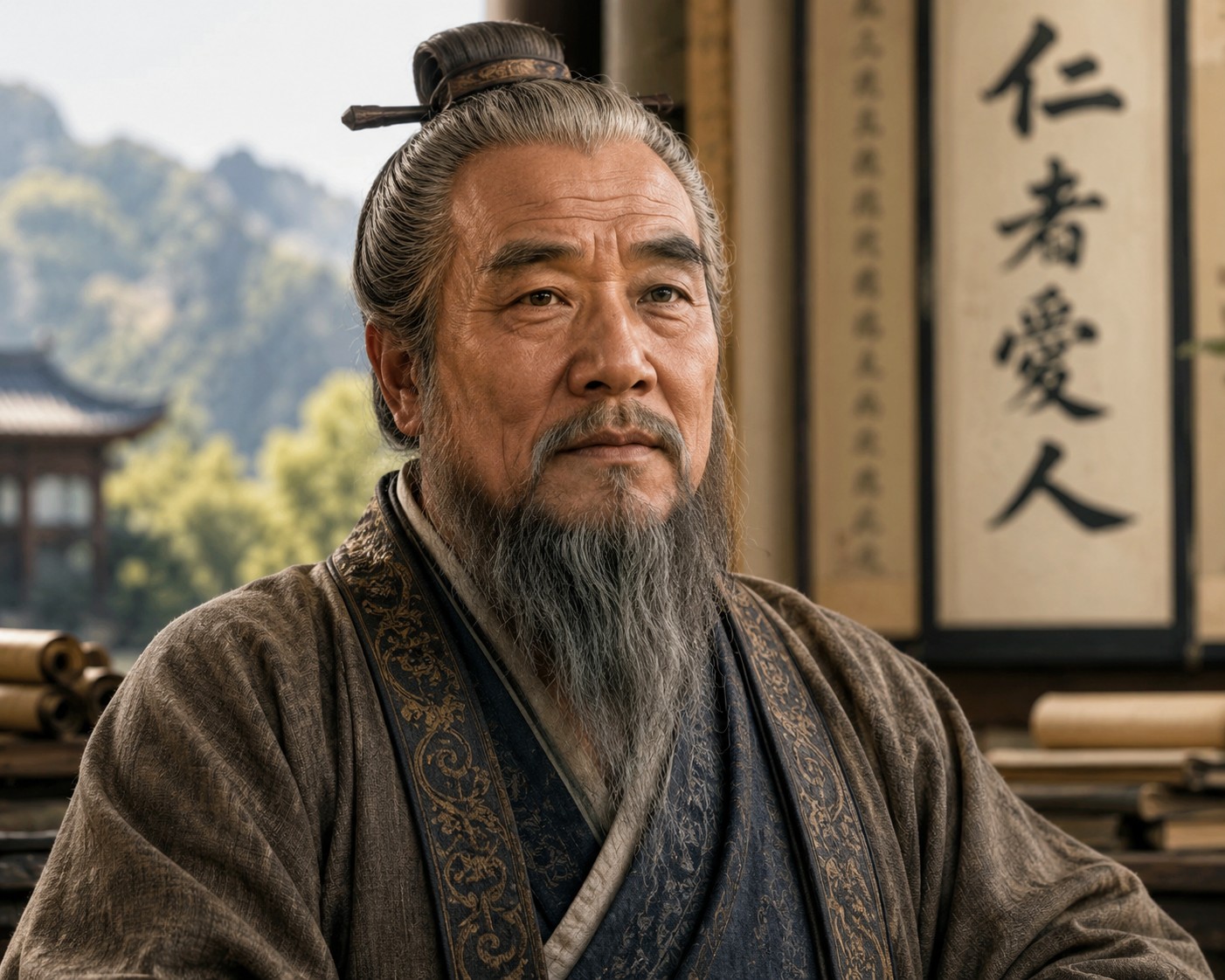
Historical Intelligence Interview: Confucius on Trust, Ethics, Artificial Intelligence, Leadership, and the Future of Civilization
Interviewer: Master Confucius, why have many societies experienced a collapse of trust despite significant economic growth?
Confucius: You ask about trust, yet in truth, you ask about the foundation of society itself. In my time, rulers often believed that prosperity alone would secure stability. I taught that a state requires three things: sufficient provisions, security, and the trust of its people. If one must be sacrificed, provisions may be sacrificed first. If another must be surrendered, security may follow. But trust must never be abandoned, for without trust, no government, institution, or society can endure. Today, I observe nations that are wealthier than ever before, yet many are poorer in human relationships. Citizens distrust institutions. Institutions distrust one another. Communities become fragmented, and individuals grow increasingly isolated. The mistake is not the pursuit of prosperity. Prosperity is desirable. The mistake is elevating wealth beyond virtue. When society begins to measure human worth solely by production, consumption, status, or financial success, trust gradually erodes. For trust is not created by contracts alone. Trust is born from character, integrity, and moral conduct. Economic growth can strengthen a society. It cannot replace the ethical foundations upon which society stands.
Interviewer: What role do ethics play in global trade?
Confucius: Trade, by its nature, is not harmful. Indeed, commerce can be one of humanity’s noblest activities, for it creates interdependence among people and encourages cooperation where conflict might otherwise emerge. Yet trade without ethics is like a great ship navigating without a compass.
If profit becomes the sole measure of success, short-term gains may be achieved, but long-term stability will be lost. Likewise, when nations pursue only immediate interests, the global order gradually transforms into a contest of exploitation rather than a system of mutual benefit. To the merchants and business leaders of your age, I would say this: Profit is the reward of trust, not its substitute. The greatest asset of any organization is not its balance sheet, its technology, or its market share. Its greatest asset is its moral credibility. Once credibility is lost, rebuilding it becomes far more difficult than generating wealth.
Interviewer: Can artificial intelligence become a threat to civilization if it develops without ethical guidance?
Confucius: The question is not fundamentally about machines. It is about human beings. A sword possesses neither virtue nor vice. Its consequences depend upon the hand that wields it. Artificial intelligence, however, differs from previous tools because it extends human decision-making power on a scale unprecedented in history. The greater the power, the greater the need for wisdom. If technological capability advances faster than moral development, civilization enters a state of dangerous imbalance. Your age possesses extraordinary knowledge. Information moves across the world in moments. Yet I ask: Has wisdom advanced at the same pace? If the answer is no, then the concern is justified. The greatest danger of artificial intelligence is not that machines will dominate humanity. The greater danger is that human beings will surrender moral responsibility to machines. A civilization remains healthy only when human judgment, conscience, and accountability remain stronger than the tools it creates.
Interviewer: How can societies cultivate responsible leaders?
Confucius: Many societies seek to educate leaders before they educate human beings. This reverses the natural order. A worthy leader is not produced by management techniques alone. Leadership begins with self-mastery. A person who cannot govern his own impulses will struggle to govern a nation. A person who is corrupted by wealth cannot be trusted with public resources. A person who sacrifices truth for popularity will fail when faced with difficult decisions. Therefore, leadership education should begin with four foundations: Self-knowledge. Personal responsibility. Moral discipline.Commitment to serving others. Only after these foundations have been established should one study administration, economics, diplomacy, or governance. A society that trains competent leaders without cultivating virtuous character may gain efficiency, but it risks losing wisdom.
Interviewer: If you had possessed knowledge of today's world and its transformations, would you have chosen different policies during your leadership in ancient China?
Confucius: Many might assume that knowledge of the future would lead me to advocate different technologies, stronger armies, or alternative economic systems. Yet the fundamental principles would remain unchanged. I would still place virtue before power, education before wealth, and character before authority. What might change is the scope of my vision. Had I known that humanity would become so deeply interconnected, I would have emphasized education not only for the formation of good citizens, but for the cultivation of responsible global citizens. Had I known that economies would become intertwined across continents, I would have spoken even more strongly about cooperation among nations and the moral obligations that accompany prosperity. Had I known that technology would one day connect billions of people, I would have insisted more firmly than ever that ethical development must advance alongside technological progress. For I now see that humanity’s greatest challenge is not a shortage of knowledge. Humanity possesses more knowledge than at any point in history. The true challenge is whether wisdom, virtue, and moral responsibility can grow as rapidly as knowledge and power. If I were to leave one message for the leaders of your age, it would be this:
Civilizations do not collapse because they lack wealth. They collapse when power becomes separated from ethics and knowledge becomes separated from wisdom.