




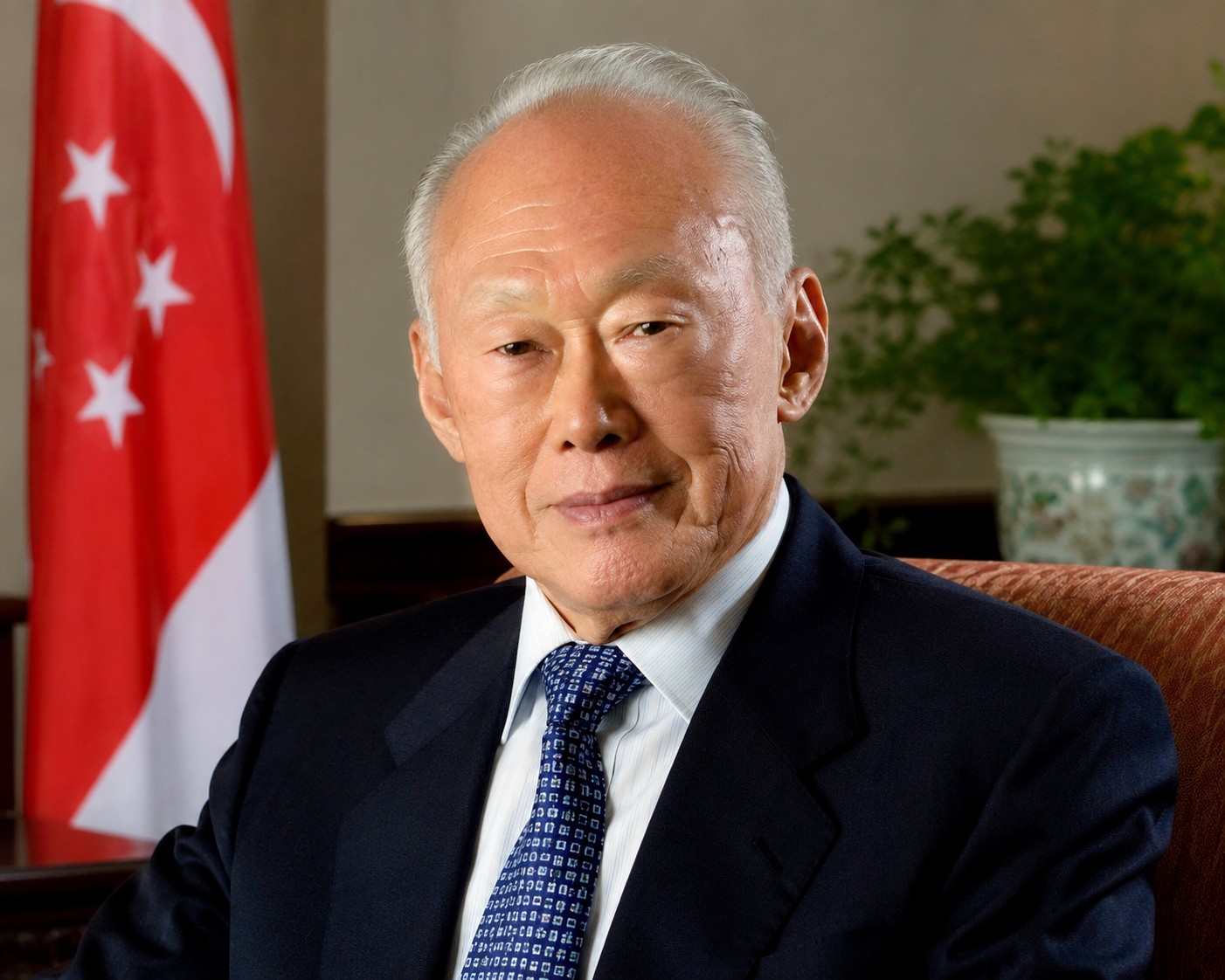
Exclusive WBO Times Interview with Lee Kuan Yew
Leadership, Development, Geopolitics, and the Future of Nations in the Twenty-First Century
Introduction
Few leaders have transformed a nation as profoundly as Lee Kuan Yew. When Singapore gained independence, it lacked natural resources, faced deep uncertainty, and was widely viewed as economically vulnerable. Within a generation, it emerged as one of the world's most prosperous, competitive, and strategically influential states. In this exclusive interview, Lee Kuan Yew reflects on leadership, economic development, globalization, artificial intelligence, national competitiveness, and the future balance of power in an increasingly uncertain world.
Part I: Leadership and Nation Building
Interviewer: Mr. Lee, what is the most important ingredient in building a successful nation?
Lee Kuan Yew: The most important ingredient is not natural resources, geography, or even capital. It is the quality of leadership and institutions. History repeatedly demonstrates that nations succeed when they cultivate competent leadership, effective institutions, and a culture that rewards merit, discipline, and long-term thinking. Many countries possess resources. Far fewer possess the ability to organize those resources effectively.
Interviewer: What is the biggest mistake developing countries make?
Lee Kuan Yew: Many leaders focus on popularity before performance. A nation cannot consume prosperity before it creates prosperity. Too often, governments become preoccupied with distributing wealth before establishing the conditions necessary to generate it. Sustainable development requires difficult decisions, long-term planning, and a willingness to prioritize national interests over short-term political gains.
Part II: Democracy, Governance, and Power
Interviewer: Many people argue that democracy alone guarantees good governance. Do you agree?
Lee Kuan Yew: No. Democracy is a method of selecting governments. It is not, by itself, a guarantee of competent government. A poorly governed democracy can damage a nation's future just as surely as an authoritarian regime. The essential question is not merely how leaders are chosen, but whether they possess the competence, integrity, and discipline required to govern effectively. Good governance is ultimately judged by outcomes, not slogans.
Interviewer: How should leaders balance freedom and stability?
Lee Kuan Yew: This is one of the most difficult challenges of statecraft. A successful society must preserve individual freedoms, but it must also maintain social cohesion, public trust, and institutional stability. When freedom becomes disorder, development suffers. When stability becomes oppression, innovation suffers. The art of leadership lies in maintaining that balance.
Part III: Globalization and Economic Competition
Interviewer: Is globalization weakening or evolving?
Lee Kuan Yew: Globalization is changing form, not disappearing. The world has become too interconnected for complete economic separation. However, nations are becoming more selective about which sectors they consider strategically important. The next era will not be defined by unrestricted globalization, but by strategic globalization. Countries will increasingly compete not only for capital, but also for talent, technology, and knowledge.
Interviewer: What makes a nation economically competitive today?
Lee Kuan Yew: Three things:
-
First, human capital.
-
Second, human capital.
-
Third, human capital.
Natural resources matter far less than the ability to educate, attract, and retain talented people. In the modern economy, talent is the ultimate strategic resource.
Part IV: Artificial Intelligence and the Future
Interviewer: How do you assess artificial intelligence?
Lee Kuan Yew: Artificial intelligence may become one of the most transformative technologies in human history. Yet technology itself does not determine outcomes. Institutions determine outcomes. Countries that successfully integrate AI into education, governance, healthcare, and industry will gain significant advantages. Those who fail to adapt risk falling behind regardless of their current wealth or influence. The challenge is not technological change. The challenge is institutional adaptation.
Interviewer: Will AI increase inequality between nations?
Lee Kuan Yew: Very likely. Historically, technological revolutions reward societies that adapt quickly and penalize those that do not. The AI era may widen the gap between countries with strong educational systems, advanced research capabilities, and effective governance, and those without them. The competition of the future will be a competition of competence.
Part V: Geopolitics and the Future World Order
Interviewer: How do you view the future relationship between major powers?
Lee Kuan Yew: Competition among great powers is a permanent feature of international relations. The names change. The dynamics remain. The challenge for smaller nations is not choosing permanent sides, but preserving strategic flexibility while protecting their interests. Wise nations understand that emotional foreign policy is often expensive foreign policy.
Interviewer: What is the greatest geopolitical risk facing the world today?
Lee Kuan Yew: Miscalculation. Most major conflicts arise not because leaders seek catastrophe, but because they misunderstand reality, overestimate their strength, or underestimate the consequences of their actions. The more interconnected the world becomes, the greater the cost of strategic errors.
Final Question
Interviewer: If you could ask today's political and business leaders only one question, what would it be?
Lee Kuan Yew: I would not ask how large their economies are. I would not ask how many companies they have created. I would not ask how much wealth they have accumulated. I would ask: "Are you preparing your people for the world that is coming, or governing for the world that has already disappeared?"
Because the future does not reward those who defend yesterday. It rewards those who prepare for tomorrow. And nations that fail to anticipate change rarely remain successful for long.