




Trade Routes, Cultural Roots
Introduction: Beyond Geography and Economics
Traditional trade theories often explain international commerce through geography, natural resources, production costs, market size, and transportation infrastructure. While these factors remain important, they do not fully explain why certain trade relationships thrive for centuries while others struggle despite favorable economic conditions. The answer often lies in culture. Throughout history, trade routes have rarely been mere pathways for goods. They have been channels for the exchange of ideas, beliefs, languages, technologies, and social norms. From the ancient Silk Road to modern global supply chains, commerce has flourished where cultural familiarity reduced uncertainty and strengthened cooperation. The geography of trade is therefore not only physical—it is cultural. Nations that share cultural affinities frequently trade more effectively because trust, communication, and mutual understanding already exist before the first transaction takes place.
The Hidden Cultural Maps of Global Commerce
When trade analysts examine global markets, they often focus on ports, railways, logistics hubs, and economic zones. Yet beneath these visible infrastructures exists a less visible network of cultural connections. Shared language, common legal traditions, historical relationships, religious similarities, educational exchanges, migration patterns, and diaspora communities create what may be called "cultural corridors." These corridors often determine the speed and ease with which business relationships develop. For example, companies frequently find it easier to expand into markets where communication styles, business etiquette, and social expectations resemble their own. Cultural familiarity reduces the cost of learning, negotiation, and adaptation. In many cases, cultural distance becomes a greater barrier than physical distance.
Culture as a Trade Accelerator
Economic integration rarely occurs in a cultural vacuum. Businesses entering culturally aligned markets generally experience lower transaction costs, faster trust formation, and smoother partnership development. Consumers are also more likely to embrace foreign brands when cultural narratives resonate with local values. This explains why regional trade blocs often emerge among countries that share historical and cultural characteristics. Economic agreements become more sustainable when supported by social and cultural compatibility. Culture acts as a trade accelerator because it reduces uncertainty. The more predictable the behavior of partners, institutions, and consumers, the easier it becomes to conduct business. Consequently, understanding cultural geography allows organizations to identify markets where expansion may be more efficient and less risky.
Diaspora Networks and Global Commerce
One of the most powerful yet underappreciated drivers of international trade is the role of diaspora communities. Migrant business networks often function as bridges between economies. They possess linguistic capabilities, cultural understanding, trusted relationships, and local market knowledge that significantly reduce trade barriers. Throughout history, some of the world's most influential commercial networks have been built around diaspora communities connecting multiple regions through shared identity and trust. In the twenty-first century, these networks continue to facilitate investment flows, supply chain development, technology transfer, and market expansion. For international traders, diaspora communities represent strategic gateways into unfamiliar markets.
The Emerging Geography of Global Supply Chains
As geopolitical competition, economic fragmentation, and technological transformation reshape global commerce, companies are increasingly reassessing their supply chains. The era of selecting partners based solely on cost efficiency is gradually giving way to a more comprehensive model that incorporates trust, stability, resilience, and cultural compatibility. Future supply chains will likely be organized around what may be called "trusted cultural ecosystems"—networks of countries and organizations capable of maintaining predictable long-term cooperation. In this environment, cultural geography will become a strategic component of supply chain design, market selection, and investment planning.
Strategic Implications for International Business
Organizations that understand cultural geography gain a significant competitive advantage. Rather than viewing global markets as isolated economic units, successful companies increasingly map cultural relationships alongside financial indicators. They analyze language clusters, historical connections, business traditions, consumer values, educational ties, and migration patterns before making strategic decisions. This approach enables businesses to identify hidden opportunities that may not be visible through purely economic analysis. The future winners of global trade will not necessarily be those who understand markets best, but those who understand societies best.
WBO Executive Recommendations for International Traders
The World Business Organization (WBO) recommends that international traders evaluate cultural proximity alongside traditional economic indicators when selecting target markets, strategic partners, suppliers, and investment destinations. Businesses should conduct Cultural Market Assessments before entering new countries, analyzing factors such as language compatibility, business etiquette, trust structures, negotiation styles, historical trade relationships, and diaspora networks. Traders should prioritize building long-term relationships within local business communities rather than relying exclusively on transactional approaches. WBO further encourages companies to establish regional cultural intelligence capabilities, engage with diaspora business networks, participate in international trade forums, and develop culturally adaptive market-entry strategies. In the emerging global economy, organizations that understand cultural geography will identify opportunities faster, navigate risks more effectively, and build more resilient international business ecosystems.
Conclusion
The geography of trade extends far beyond ports, highways, and shipping lanes. It encompasses the invisible networks of trust, language, history, identity, and culture that connect societies across borders. While technology continues to reduce physical distance, cultural distance remains one of the most important variables in international commerce. For governments, businesses, and international organizations alike, understanding the cultural geography of trade is no longer a matter of academic interest—it is a strategic necessity. The future of global commerce will be shaped not only by where goods can travel, but by where cultures can connect.
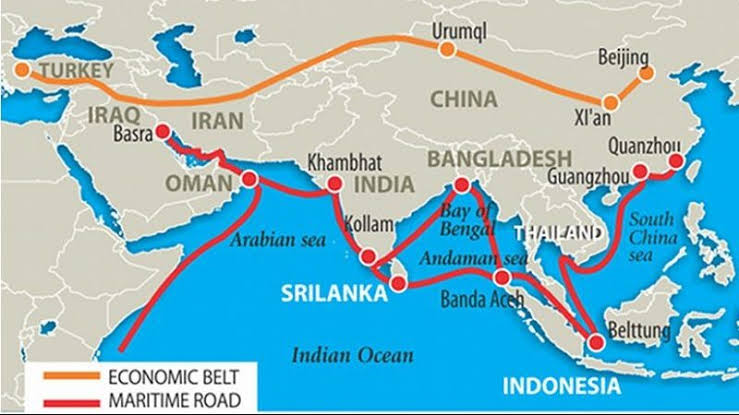
Global trade is not shaped by economics and logistics alone. Behind every major trade corridor lies a deeper cultural geography built upon shared histories, languages, values, trust networks, and social connections. Understanding these cultural foundations allows businesses to identify opportunities, reduce market-entry risks, and build stronger international partnerships.
Font Size
1x
Reading time: 5 min