




Stress Is Not a Leader's Enemy—It Is a Mirror of Their Decision-Making
For years, stress has been portrayed as the greatest enemy of effective leadership. Yet emerging insights from business psychology suggest that stress itself is not the real problem. The real issue is how our minds respond to it.
The reality is that no business owner can afford to wait for calm conditions before making important decisions. Rising costs, market volatility, competitive pressure, cash flow challenges, and the responsibility of leading a team make stress an unavoidable part of entrepreneurship. The better question, therefore, is not "How can we eliminate stress?"* but rather, *"How can we make better decisions while experiencing it?"
From the perspective of business psychology, stress does not create a new personality—it reveals existing mental patterns. A leader who naturally tends to control every detail will often become an extreme micromanager under pressure. A manager who usually postpones difficult decisions is likely to become even more indecisive during a crisis. In contrast, leaders with greater psychological awareness are able to create a pause between emotional reactions and rational judgment, allowing them to make clearer decisions even in highly stressful situations.
This is why the quality of leadership depends less on the amount of stress someone experiences and far more on the quality of their psychological framework. Modern psychology explains this with a simple principle: *stress activates our hidden mental patterns. * If those patterns are healthy and adaptive, performance can actually improve under pressure. If they are dysfunctional, stress amplifies poor judgment, emotional decision-making, burnout, and costly mistakes.
This is where psychology moves beyond personal well-being and becomes a strategic business advantage. Leaders who invest in self-awareness, emotional regulation, and understanding their own cognitive patterns are not simply improving their mental health—they are strengthening their ability to lead teams, navigate uncertainty, and make high-quality decisions when the stakes are highest.
Perhaps the most valuable lesson for entrepreneurs is this: stop viewing stress as the enemy. Every crisis functions as a pressure test, revealing the true strength of a leader's decision-making system. The most successful businesses are not those that experience the least stress. They are led by individuals who have learned to put psychology at the service of business—rather than allowing psychological pressure to dictate their decisions.
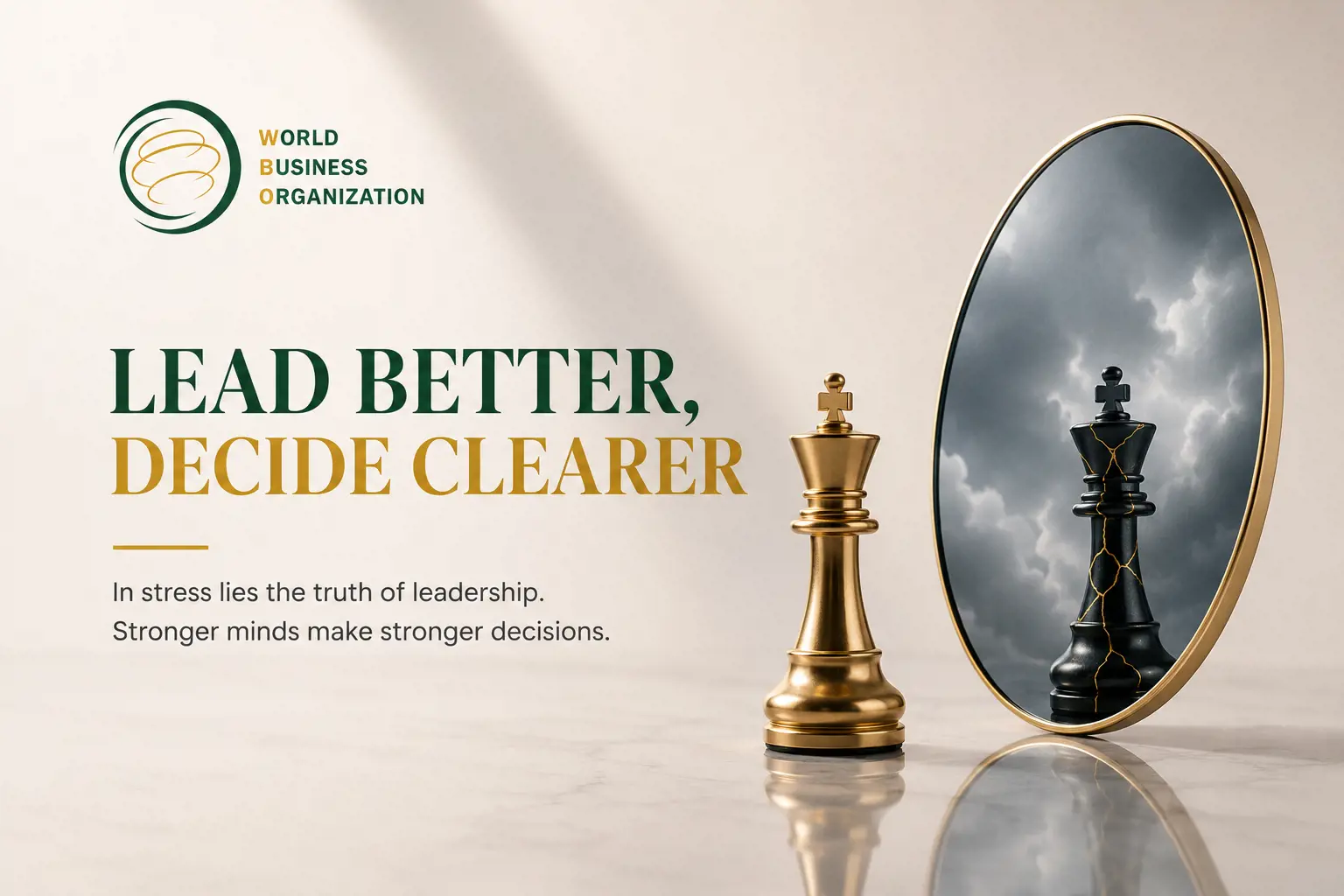
Stress does not weaken leadership; it exposes the quality of decision-making. The strongest leaders are not those who avoid pressure, but those who master their psychology and make clear, strategic decisions when it matters most.
Font Size
1x
Reading time: 2 min