




India's Manufacturing Ambition: Can It Become the World's Next Factory?
For decades, global manufacturing has been dominated by a handful of industrial giants. Today, however, geopolitical tensions, supply chain disruptions, and shifting investment strategies are accelerating one of the most significant industrial realignments of the twenty-first century. At the center of this transformation stands India—a nation determined not merely to participate in global manufacturing, but to lead it.
With the world's largest population, one of the fastest-growing major economies, and an expanding domestic market, India possesses many of the ingredients necessary to become a global production hub. Government initiatives aimed at strengthening manufacturing, improving infrastructure, attracting foreign direct investment, and promoting industrial innovation have already encouraged multinational corporations to diversify production into the country.
Yet the opportunity extends far beyond replacing existing manufacturing centers.
The future of global manufacturing will not be defined by low-cost labor alone. It will increasingly depend on advanced technologies, resilient supply chains, intelligent automation, sustainable production, and highly skilled human capital. In this new industrial era, competitiveness will be measured by productivity rather than population size.
India is investing heavily in industrial corridors, logistics infrastructure, semiconductor manufacturing, electronics production, renewable energy, and digital transformation. These investments reflect a broader strategy: positioning the country as an integrated manufacturing ecosystem capable of serving both domestic demand and international markets.
However, ambition alone does not guarantee success.
Manufacturers continue to face challenges related to regulatory complexity, infrastructure gaps in certain regions, workforce skill development, land acquisition processes, and administrative efficiency. Global investors increasingly evaluate not only production costs but also legal certainty, policy consistency, supply chain reliability, and ease of doing business.
Competition is equally intense.
Countries across Southeast Asia, the Gulf region, and Central Europe are actively pursuing the same investment flows. Governments worldwide are offering tax incentives, industrial parks, advanced logistics, and investor-friendly regulations to attract multinational manufacturers relocating their operations.
India's greatest competitive advantage may ultimately lie in the combination of three strategic assets: its massive consumer market, its rapidly expanding digital economy, and its growing pool of engineers, entrepreneurs, and technology professionals. If these strengths are successfully integrated with modern industrial policy, India could become more than a manufacturing destination; it could emerge as a global center for industrial innovation.
The broader implications extend well beyond India itself.
A stronger Indian manufacturing sector would reshape global supply chains, diversify production networks, reduce concentration risks, and create new opportunities for international trade and investment. Businesses around the world would benefit from greater resilience, increased competition, and expanded market access.
The defining question is no longer whether India has the potential to become a manufacturing superpower.
The real question is whether it can transform demographic strength into industrial excellence before the next wave of global manufacturing competition reshapes the world economy once again.
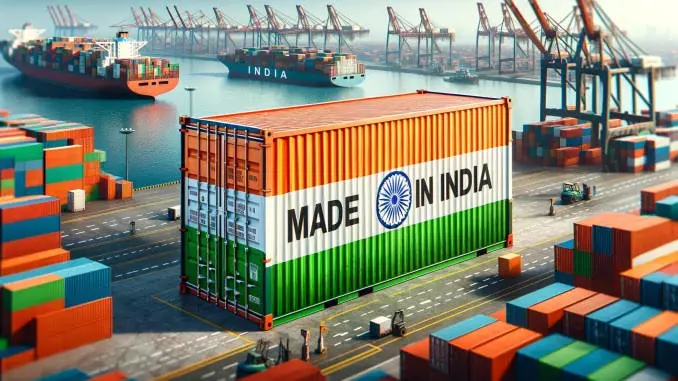
As global manufacturers rethink supply chains and reduce dependence on single-market production, India is positioning itself as the world's next manufacturing powerhouse. But transforming ambition into industrial leadership will require more than scale, it will demand speed, innovation, and structural reform.
Font Size
1x
Reading time: 3 min