




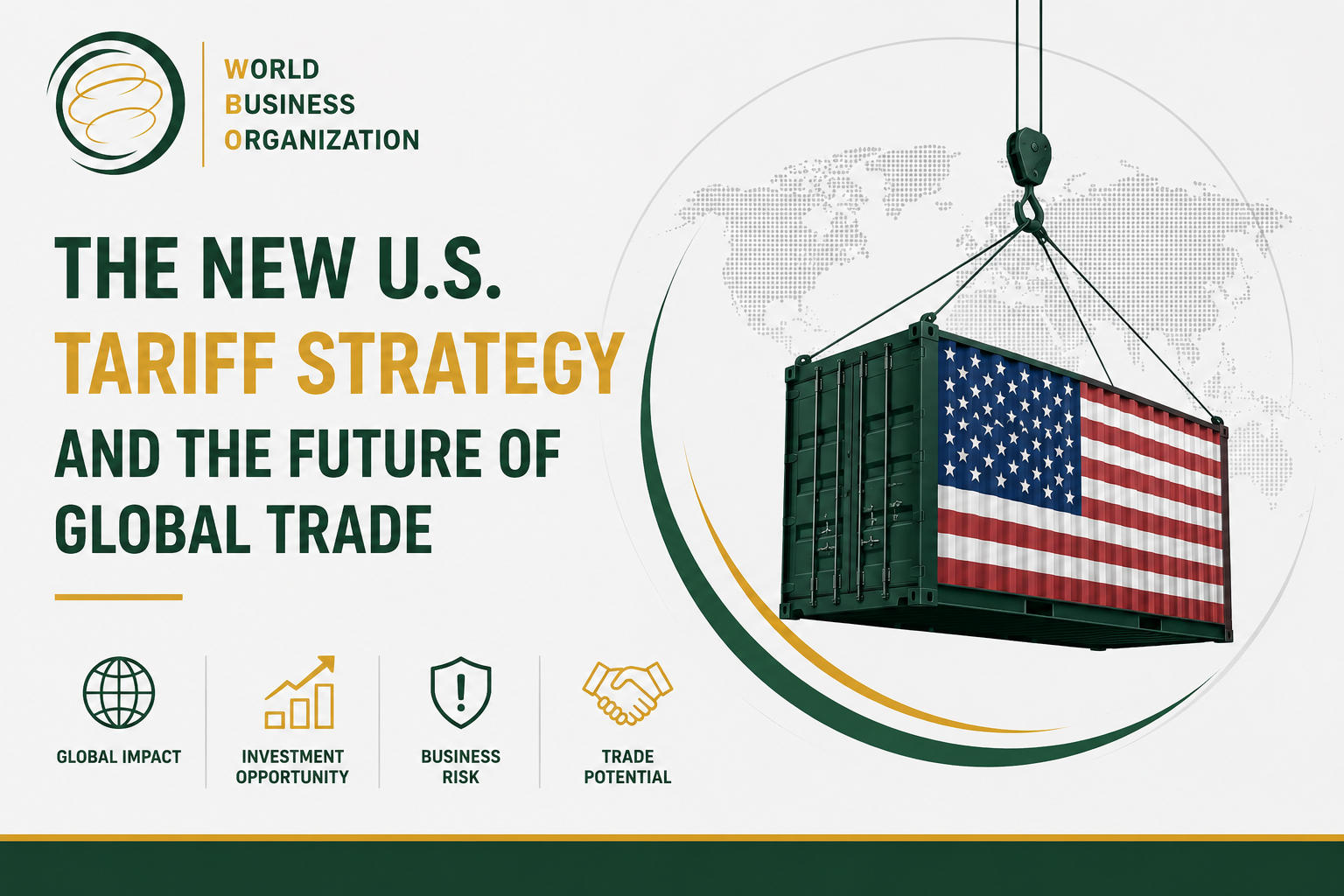
The New U.S. Tariff Strategy and the Future of Global Trade
Recent shifts in U.S. trade policy reflect a broader transformation in the global economic order. Tariffs have become central to Washington's efforts to reinforce domestic manufacturing, reduce reliance on strategic competitors, secure critical industries, and promote technological leadership. Rather than representing isolated policy actions, these measures constitute a comprehensive economic strategy that integrates industrial policy, national security, and geopolitical considerations.
The impact extends well beyond bilateral trade relationships. Increased tariffs on sectors such as steel, aluminum, semiconductors, electric vehicles, batteries, clean energy technologies, and advanced manufacturing are accelerating the restructuring of global supply chains. Multinational corporations are increasingly diversifying production locations to reduce geopolitical risks and improve operational resilience. This process, often referred to as supply chain diversification or "friend-shoring", is encouraging investment in emerging manufacturing hubs across Southeast Asia, India, Central Asia, the Gulf region, Eastern Europe, and parts of Latin America.
For developing and emerging economies, this evolving environment presents a significant opportunity. Countries capable of providing political stability, transparent regulatory frameworks, modern infrastructure, skilled labor, and efficient logistics networks are becoming increasingly attractive destinations for foreign direct investment. Governments are responding by introducing investment incentives, improving industrial zones, expanding transport corridors, and strengthening international trade partnerships to capture a greater share of global manufacturing and logistics activities.
At the same time, the growing use of tariffs introduces new uncertainties for international business. Companies must navigate changing customs regulations, fluctuating production costs, geopolitical tensions, and evolving market access conditions. As a result, business resilience is becoming just as important as operational efficiency. Organizations are investing in supply chain visibility, regional diversification, digital trade solutions, and strategic risk management to ensure long-term competitiveness.
This transformation also highlights the growing intersection between economics and geopolitics. Trade policy is increasingly being used to achieve broader strategic objectives, making international commerce more closely linked to diplomatic relations, technological competition, energy security, and national resilience. Businesses can no longer evaluate markets solely on cost advantages; political stability, regulatory predictability, and strategic partnerships have become equally decisive factors in investment decisions.
Strategic Outlook
Global trade is unlikely to experience deglobalization but rather a significant reconfiguration. Future economic leadership will depend on resilience, technological innovation, diversified supply chains, and trusted international partnerships. Nations that successfully position themselves as reliable investment destinations and regional logistics hubs will be better placed to attract capital, technology, and long-term industrial development in the coming decade.
WBO Insight
The new U.S. tariff strategy signals a structural transformation rather than a temporary policy adjustment. Governments and businesses that proactively diversify markets, strengthen regional cooperation, and invest in resilient supply chains will be best positioned to capitalize on emerging opportunities while mitigating the risks associated with an increasingly fragmented global trading environment.