




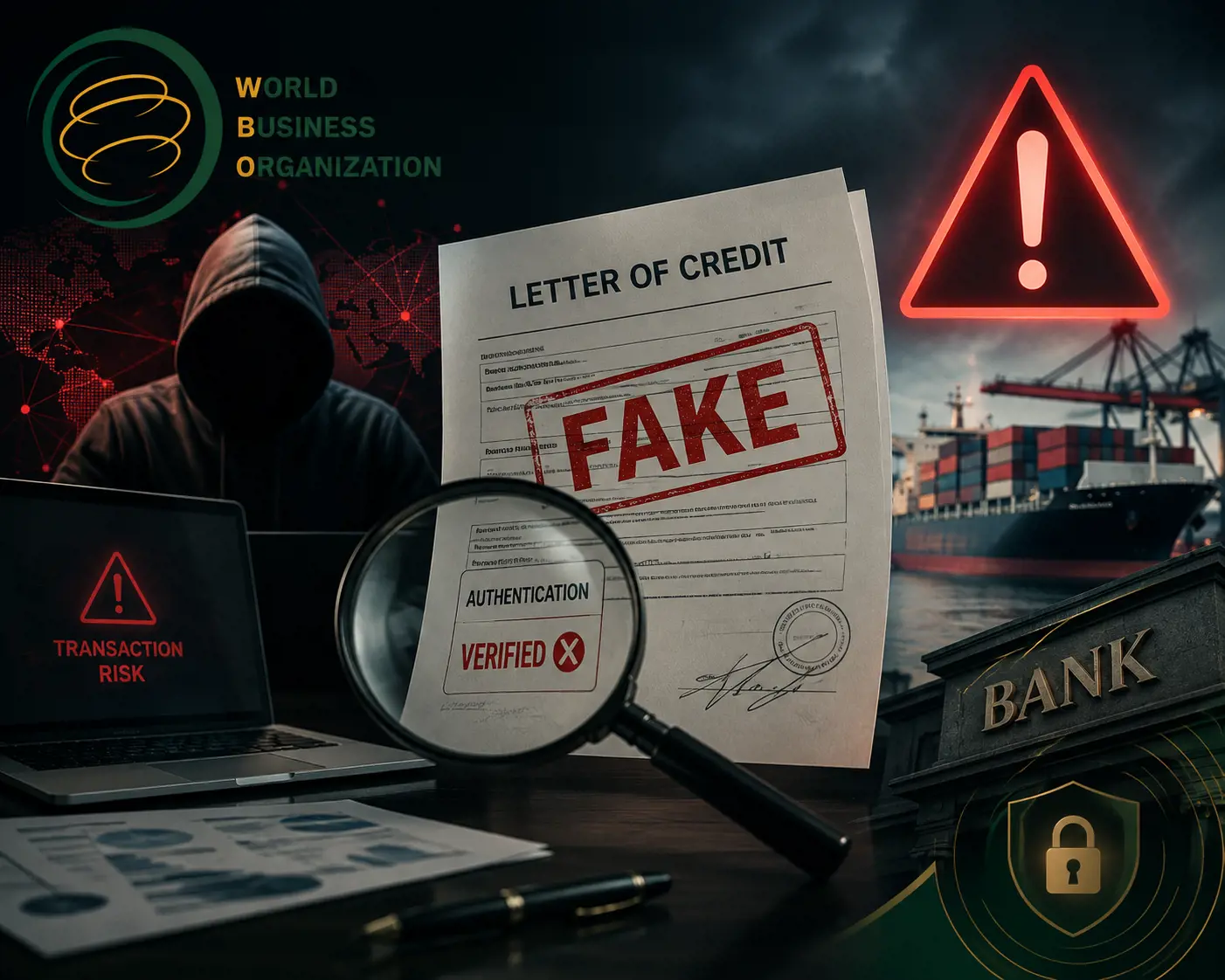
Threats Lurking: The Fake LC Trap in International Trade
A Letter of Credit (LC) is designed to reduce payment risk in international trade by creating a bank undertaking subject to specified documentary conditions. However, one of the classic fraud risks is the presentation of a fake, forged, or improperly authenticated Letter of Credit to convince an exporter that payment is secured when, in reality, no valid bank undertaking exists.
A common scenario begins with a buyer sending the seller an impressive-looking LC by email, PDF, or scanned document. The document may contain genuine bank names, logos, signatures, reference numbers, and apparently correct SWIFT terminology. The fraudster may then pressure the exporter to manufacture or ship goods, pay an intermediary, arrange transportation, or incur other costs on the assumption that the LC guarantees payment.
The critical point is that a document that looks like an LC is not necessarily an operative documentary credit.
Under international documentary-credit practice, the advising process is fundamentally bank-to-bank. ICC guidance notes that issuing banks ordinarily transmit credits through banking channels, and the advising bank has a role in authenticating and advising the credit.
How Traders Can Protect Themselves
1. Never rely on an LC received directly from the buyer.
A PDF or scanned LC should never be treated as sufficient evidence that a valid credit has been issued.
2. Verify the LC through your bank.
Ask your bank's trade-finance department to confirm that the credit has actually been received through the appropriate banking channel and identify the issuing bank.
3. Verify the issuing bank independently.
Do not use telephone numbers, email addresses, or contact information supplied only by the buyer or the document itself.
4. Check the governing rules.
If the LC is subject to UCP 600, the relevant terms and documentary requirements should be reviewed carefully before the transaction proceeds. UCP 600 governs documentary credits when expressly incorporated into the credit.
5. Do not confuse “LC issued” with “payment guaranteed under all circumstances.”
A documentary credit is conditional on presentation of documents complying with its terms.
6. Be extremely cautious about requests for upfront fees.
If the buyer or an alleged bank representative asks the exporter to pay a “release fee,” “activation fee,” “SWIFT charge,” or similar payment before the LC becomes operative, stop and independently verify the entire transaction.
WBO’s Approach to Trade Risk Education
The World Business Organization (WBO) places particular emphasis on practical risk awareness and transaction-security education for international traders. Through its educational, advisory, and knowledge-sharing activities, the World Business Organization seeks to help businesses identify common patterns of trade fraud before they result in financial loss. This includes strengthening traders’ understanding of Letters of Credit, documentary compliance, counterparty due diligence, payment security, banking procedures, trade documentation, and financial risk indicators.
The World Business Organization also encourages businesses to develop internal transaction-control procedures rather than relying solely on trust or previous commercial relationships. Understanding how an LC works is only the first step; knowing how to authenticate it, how to identify inconsistencies, when to involve the bank’s trade-finance department, and when to suspend a transaction is what provides practical protection. Through this approach, WBO aims to promote a stronger culture of risk prevention across the international business community, because in global trade, professional knowledge is one of the first lines of defense against sophisticated commercial fraud.
The Golden Rule
Never ship goods, release title documents, or make substantial financial commitments solely because you have received an LC document. First, have your bank independently authenticate and advise the credit.
In international trade, the question is not “Does the LC look genuine?”
The correct question is:
“Has my bank independently confirmed that an authentic documentary credit has been issued by the stated issuing bank, through the appropriate banking channel, and under terms that provide meaningful protection for this transaction?”
That distinction can be the difference between a secured trade transaction and a substantial commercial loss.
WBO Times | Threats Lurking
WBO Trade Risk & Compliance Desk
Practical Knowledge for Safer International Trade